Are Americans Welcome In Scotland Right Now?
A straight answer for American visitors planning a trip to Edinburgh and Scotland: how Scots receive US tourists, what the paperwork involves, and which free walking tours run in English.

Are Americans Welcome In Scotland Right Now?
Yes, Americans are welcome in Scotland right now, and the welcome is not grudging. Scotland's tourism economy runs partly on overseas visitors, American travellers are a established part of that mix, and nothing in current Scottish policy, practice or public mood singles US citizens out for anything worse than the standard travel paperwork. Edinburgh in particular is a city that talks to visitors all day, every day.
I grew up in the Great Glen and I now write from near Inverness, and I can tell you the thing Americans most often get wrong about Scotland is not etiquette. It is the assumption that the country is a colder, warier version of England. It is not, and the welcome reflects that.
Scotland's tourism bodies do not treat American visitors as a niche. Edinburgh's festival economy, its castle queues and its free walking tour scene all assume an international crowd, and English is the shared language of nearly all of it. The city's Old Town alone carries dozens of tip-based walks every week, run by independent local guides and listed on GuruWalk. This site's roster covers 25 free GuruWalk walking tours in Edinburgh, offered in English, Spanish, Italian, French and German.
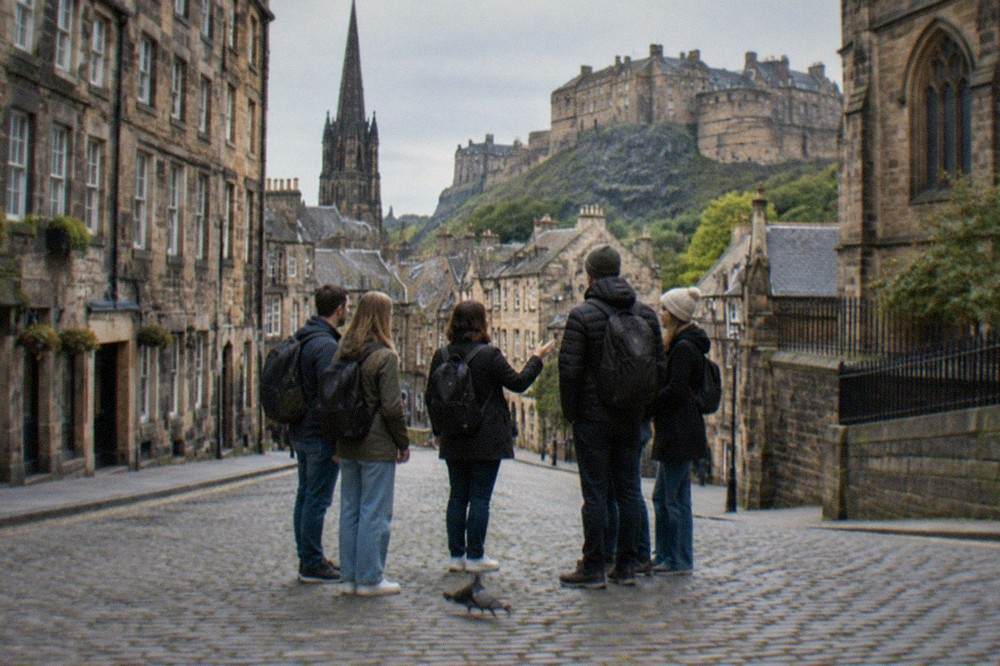
That scale matters for an American visitor in a practical way: the walks most likely to suit you are the English-language ones, and they are easy to find and reserve. The three below are all English-language, tip-based walks from the verified roster.
Every one of these is a real listing on GuruWalk, run by an independent local guide. The walk costs nothing to reserve, the guide is paid by tips at the end, and a referral link from a site like this one changes nothing about what you pay on the day.
Do Americans Need A Visa Or Special Paperwork For Scotland?
No visa is needed for American tourists visiting Scotland for a short stay, because Scotland is part of the United Kingdom and Americans qualify for standard UK visa-free entry. What Americans do need is the UK's Electronic Travel Authorisation, a digital permission linked to your passport that you apply and pay for online before departure. Build a little time into your planning for it rather than leaving it to the airport.
The ETA is the one genuinely new piece of bureaucracy in recent years, and it catches Americans out because it did not exist when many guidebooks were written. Apply through the official UK government route, not through any third-party site that charges a mark-up. Once granted, it is electronically tied to the passport you applied with, so use that passport to travel.
Beyond the ETA, the practical picture for an American visitor is straightforward. Scotland uses the pound sterling, not the euro, and card payment is accepted almost everywhere in Edinburgh, though cash still has a role: 40% of Scots sometimes or often carry cash specifically to control spending, and tour guides who work for tips are one group where cash or a card reader both get used freely.
One thing that does not apply to day visitors: Edinburgh's Visitor Levy. That is a 5% charge on paid overnight accommodation, in force across the city from 24 July 2026, and it is collected by accommodation providers rather than paid separately. It appears as a line on your hotel bill, not as a border fee, and it funds council projects including parks and arts venues. It does not apply to attraction tickets or to anything you pay a walking guide.
If you are weighing up how much a few days actually costs, the piece I wrote on what five days in Edinburgh costs breaks the budget down item by item, and the Edinburgh on a budget guide covers the free attractions that keep the daily spend low.
Which Edinburgh Walking Tours Actually Run In English?
Most of the highest-volume free walking tours in Edinburgh do not run in English, which surprises Americans every single summer. Edinburgh is a Spanish-first free-walk market: of the 25 free walking tours on this site's roster, 13 are English-capable and 12 are not, and the single largest walk, with 6,470 reviews, runs in Spanish. Check the language line on a listing before you reserve, not after.
This is the single most useful thing I can tell an American visitor about Edinburgh's free tour scene, and it comes straight from the roster I verified listing by listing. The review counts tell the story plainly. Of 18,372 total GuruWalk reviews across the roster, 12,485 sit on non-English walks. If you book the biggest walk in the city expecting English, you will spend two hours understanding very little.
The English-language walks are still excellent, and the table below shows the ones an American visitor can reserve with confidence, with their ratings, durations and meeting points exactly as verified.
| Walk | Language | Rating on GuruWalk | Duration | Meets at |
|---|---|---|---|---|
| 2-Hour Walk With a Famous Dog | English | 4.99 out of 5 across 2,282 reviews | 2:00 | 33 George IV Bridge |
| Local Lad's 2-Hour Walk | English | 4.96 out of 5 across 178 reviews | 2:00 | The Royal Mile, 142 High St |
| History and Fun Facts Walk | English | 4.9 out of 5 across 20 reviews | 2:00 | 5 Cockburn St |
| A Walk Through History | English | 4.73 out of 5 across 22 reviews | 2:00 | Queensberry Memorial to Walter Scott |
| Essential Walk With German Option | German, English, French and Italian | 4.76 out of 5 across 2,889 reviews | 2:00 | 361 High St |
Two of these stand out for an American visitor's first day.
The 2-Hour Walk With a Famous Dog is the strongest English-language option on the roster by rating and volume: rated 4.99 out of 5 across 2,282 GuruWalk reviews, two hours long, meeting at 33 George IV Bridge. It covers the Old Town's core, and the dog is a genuine part of the experience rather than a gimmick. For an American visitor wanting a first-day orientation in English with a guide who handles questions well, this is the walk I would point you at first.
The other English-language essential worth knowing is the Essential Walk With German Option, rated 4.76 out of 5 across 2,889 GuruWalk reviews, two hours, meeting at 361 High Street on the Royal Mile. Despite the name, it runs in German, English, French and Italian, so check which language your chosen departure is listed in. It suits travellers who want the classic Old Town essentials and like a multilingual guide.
For a fuller comparison, the guide to free walking tours in Edinburgh lists every verified walk with its language, meeting point and rating side by side, and the piece on how free walking tours in Edinburgh work explains the reservation and tipping mechanics.
What Do Scots Actually Think Of American Visitors?
Scots distinguish clearly between American people and American politics, and the welcome extends to the people. In practice, American visitors are received with curiosity and a fair amount of friendly teasing about volume, small talk and the size of your cars. The teasing is affectionate, and the fastest way into a real conversation is to ask a local about their own country rather than explain yours.
I say this as a Highland writer who has spent seasons crewing passenger boats on Loch Ness and the Caledonian Canal, where American visitors made up a large share of the people I talked to every working day. The pattern was consistent: the Americans who asked questions got the longest answers, and the ones who announced opinions got polite smiles.
Edinburgh is a festival city, and its public culture is built for international crowds. The Edinburgh Festival Fringe in 2026 ran 4,232 shows from 77 countries across 306 venues, per the Fringe Society's own wrap-up, and the city absorbed it the way it absorbs everything, by talking to strangers in queues. An American accent in Edinburgh is completely unremarkable in August and only slightly remarkable in February.
There is etiquette, and it is mostly about volume and space. The Royal Mile is narrow, busy and residential at its edges, and Dean Village in particular is a working residential neighbourhood where visitors are asked to stay on public roads and the riverside path. The site's what not to do in Edinburgh as a tourist piece covers the local rules in detail, and the one that matters most is simple: treat closes and courtyards as someone's home address, because they are. One of the free walking routes passes through here: Essential Historical Walk, Spanish.
How Much Should Americans Tip On A Free Walking Tour?
There is no required amount, ever, on a free walking tour: the whole model is pay what you want, and the guide is paid by tips. GuruWalk's own guidance says many travellers give between 10 and 15 euros per person, and UK regional guidelines put a fair tip at £10 to £15 per person, but those are suggestions, not prices. Pay what the walk was worth to you, and do not reserve a walk you cannot afford to tip on.
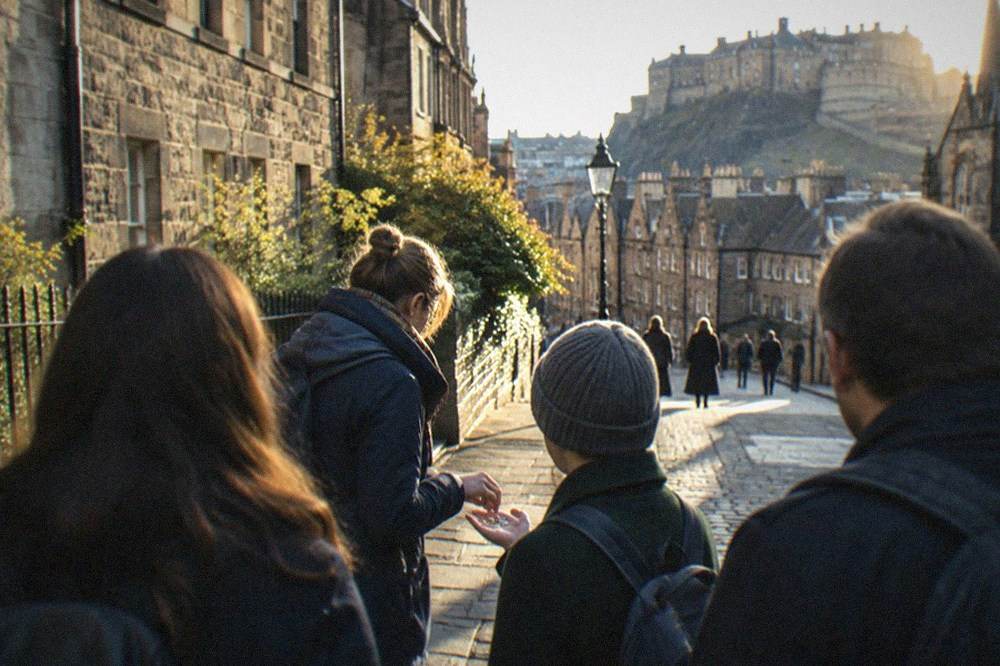
Americans overthink this less than most, because tipping culture at home is more aggressive than Scotland's. The one adjustment to make is direction: on a free walk you are not adding 18 to 20 percent to a known price, you are setting the entire price yourself after the fact. A two-hour walk that told you things you did not know is worth real money; a walk you quietly left early is worth less, and saying so with your tip is how the model self-corrects.
The legal background is worth one sentence. The UK's statutory code of practice on the fair distribution of tips, revised in June 2026, governs how employers handle tips for workers, but it does not cover the self-employed, and free-walk guides on GuruWalk are independent operators. Your tip goes to the person who guided you.
Cash is handy but not essential. Most guides carry card readers, and 40% of Scots carry cash partly for exactly this kind of moment. If you want a deeper treatment, the site has a full piece on how much to pay for a free walking tour and one on what happens if you don't tip, and neither will ask you for a number you cannot afford.
What Should Americans Know About Scottish Money And Daily Costs?
Scotland uses pounds sterling, Scottish banknotes are legal currency alongside English ones, and US cards work almost everywhere in Edinburgh. The numbers an American visitor actually feels are the small ones: a single bus or tram fare is £2.40, a day ticket is £6.00, and the biggest avoidable cost is Edinburgh Castle at £23.50 online for an adult, which is why the free attractions matter. This stop sits on a free walking route, Local Lad's 2-Hour Walk.
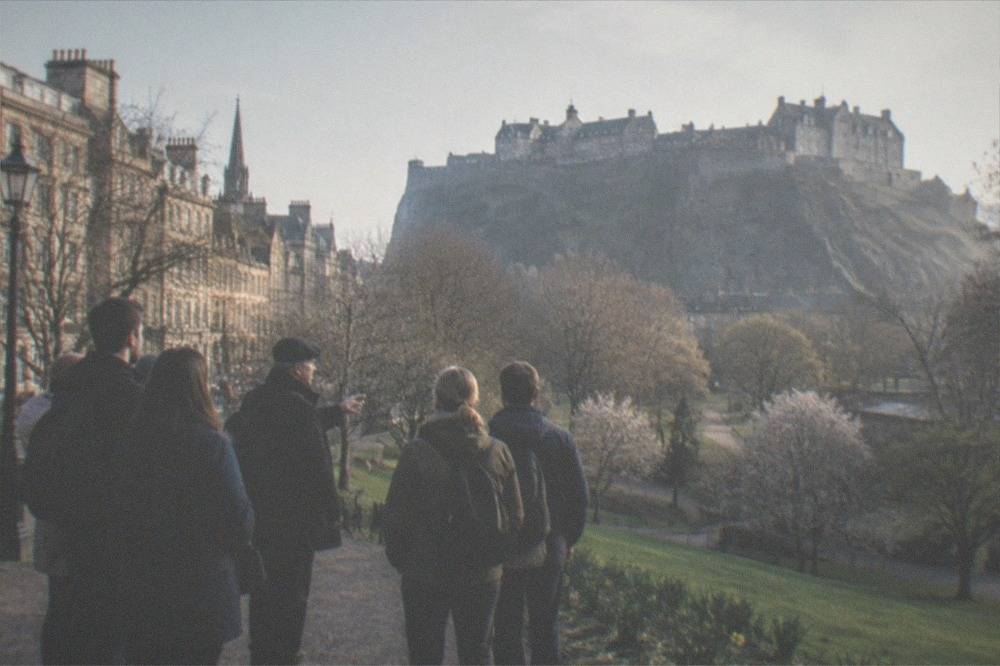
The castle point deserves emphasis because Americans arrive expecting the famous landmarks to be free, and several of them are not. Edinburgh Castle is paid, at £23.50 online for an adult, and the Palace of Holyroodhouse is paid too. What is free around them is genuinely free: Holyrood Park and Arthur's Seat are open 24 hours a day year-round at no charge, the National Museum of Scotland has free general entry, and the Scottish Parliament lets you walk in without booking. The site exists to sort exactly this, and Free Things to Do in Edinburgh is where the verified free list lives.
For getting around, an American visitor does not need a car in Edinburgh, and should not rent one for the centre. The traffic bans on Cockburn Street, Victoria Street and West Bow were made permanent in 2026, the trams run from the airport, and the city is compact enough that most visitors walk everywhere. The Airlink 100 bus from the airport is £6.00 single. This stop sits on a free walking route, History And Fun Facts Walk.
What Are The Common Mistakes Americans Make In Edinburgh?
The four that recur are booking a non-English walk by accident, underestimating the weather, treating every close as a photo set, and assuming the famous buildings are free. All four are avoidable in ten minutes of planning: check the language line, pack a real rain layer, respect residential streets, and read the admission rules before you queue.
The language mistake is the most wasteful because it costs a whole morning. It happens because the biggest walks have the most reviews and look most attractive, and because nothing in a booking flow flags language until you read the GuruWalk listing carefully. Every walk recommended anywhere on this site states its language, and the roster is verified listing by listing.
The weather mistake is the most uncomfortable. Edinburgh is not cold, but it is wet and windy on short notice, and Arthur's Seat in particular catches people out: coastguard helicopters airlifted injured walkers off it twice in 2026. Wear real shoes, take a layer, and if the rain arrives, the site's bad-weather guide lists the museums and galleries that cost nothing indoors.
The free-attraction mistake is the most expensive. The two monuments on Calton Hill are both paid, the Nelson Monument has no free tier at all, and St Giles' Cathedral is moving to a £12 visitor charge for non-Scottish residents. The verified free list, not a guidebook's memory, is what to trust here. A free walk covers this ground: Ghosts And Mysteries, Royal Mile.
If an English-language walk is what will anchor your first day, these three are the ones to choose between.
Common Questions About Americans In Scotland
Are Americans Welcome In Scotland Right Now?
Yes. Scotland's tourism sector actively welcomes American visitors, nothing in current policy restricts US tourists beyond standard UK entry rules, and in Edinburgh an American accent is entirely ordinary. Scots separate people from politics, and the practical welcome, from guides to hotel staff, is warm and unhurried.
Do Americans need a visa for Scotland?
No visa for a short tourist stay, but Americans do need the UK Electronic Travel Authorisation, applied for and paid for online before travel and linked electronically to the passport used in the application. Apply through the official UK government route only.
Is Scotland friendly to American tourists?
Yes, with friendly teasing. Scots are famously conversational with visitors who show interest in Scotland, and American visitors are a long-established part of the tourism economy. Ask locals about their country and you will get the best of the welcome.
Can Americans join free walking tours in Edinburgh?
Yes, and English-language options are strong. The 2-Hour Walk With a Famous Dog is rated 4.99 out of 5 across 2,282 GuruWalk reviews, and the Local Lad's 2-Hour Walk is rated 4.96 out of 5 across 178 reviews. Both run in English and cost nothing to reserve, with the guide paid by tips.
How much should an American tip on a free walking tour?
There is no required amount. GuruWalk's own guidance notes many travellers give between 10 and 15 euros per person, and UK guidance puts a fair tip at £10 to £15, but the model is pay what you want. Pay what the walk was worth and reserve only what you can afford to tip on.
Is Edinburgh expensive for American visitors?
Daily costs are moderate if you use the free attractions. A bus or tram single is £2.40, a day ticket is £6.00, and the major free sights, Arthur's Seat, the National Museum of Scotland, the Scottish Parliament and the Royal Mile museums, cost nothing. The paid landmarks, Edinburgh Castle at £23.50 online and the Palace of Holyroodhouse, are the big optional spends.