Is Arthurs Seat Free?
Arthur's Seat and Holyrood Park cost nothing to visit, and the operator says so in plain words. Here is what is free, what is paid nearby, and how to plan the climb.
Is Arthurs Seat Free?
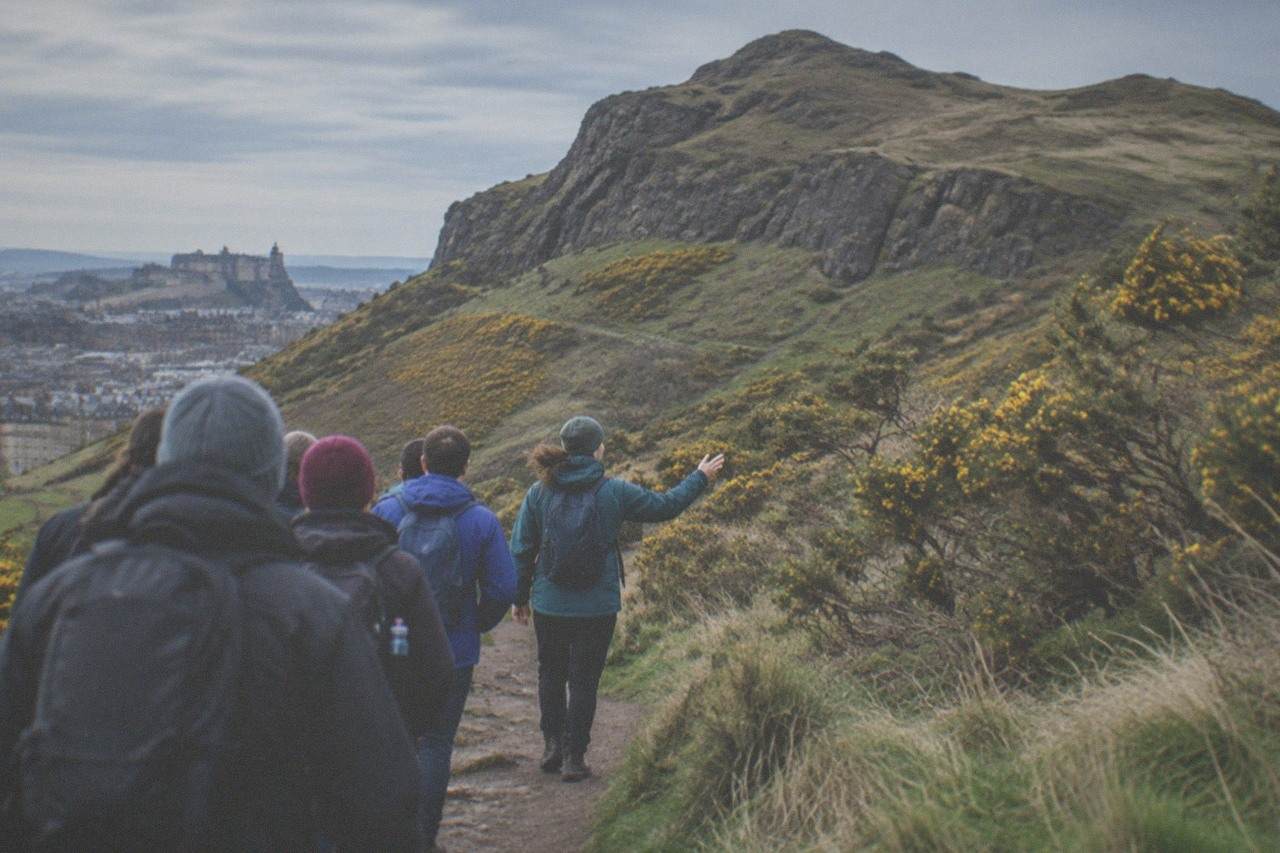
Yes, Arthur's Seat is free to climb, with no ticket, no gate and no booking. The body that looks after it, Historic Environment Scotland, states on its own visit page that Holyrood Park is open 24 hours a day, year-round and is free to visit. That is the strongest kind of free claim available in Edinburgh: an admission policy published in the operator's own words rather than inferred from the absence of a ticket kiosk.
The distinction matters more here than almost anywhere else in the city. Edinburgh is a place where several famous landmarks that look walkable from the outside are in fact paid attractions. Edinburgh Castle, which sits at the other end of the Royal Mile from Arthur's Seat, charges adults £23.50 online or £26 at the walk-up window. The Palace of Holyroodhouse, which shares the foot of the royal park with Arthur's Seat, charges adults £29.70 in advance. A visitor who assumes the pattern and expects a fee at the volcano will be pleasantly surprised, because there is no mechanism to collect one. One of the free walking routes passes through here: Canongate History Walk.
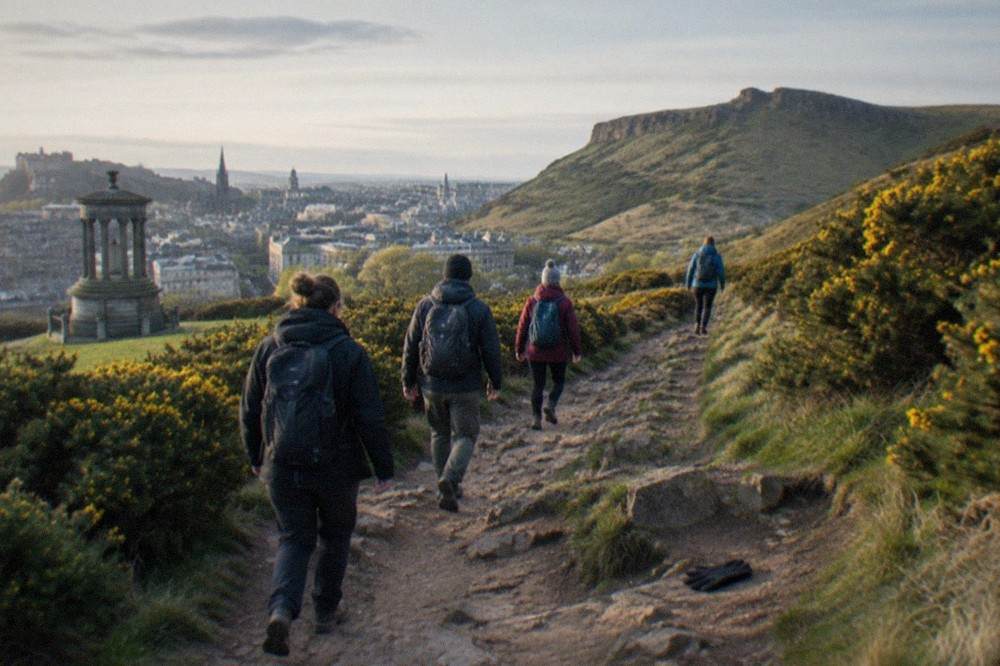
What you are actually standing on is the eroded stump of a volcano, ancient beyond easy imagining, that survived the ice ages while the softer rock around it was scraped away. The climb to the summit is modest in metres but feels steeper than the numbers suggest once you are on the final stone steps. Most people manage it in under an hour from the car parks at Dunsapie Loch or the bottom of the Radical Road approach, and the reward is a view that takes in the whole city, the Firth of Forth and, on a clear day, the hills of Fife and the Pentlands at once. It is the single best free thing to do in Edinburgh, and I say that as someone who has spent a lot of years in Scottish weather deciding which views are worth the walk.
The park around the hill is Holyrood Park, and it is a scheduled ancient monument in its own right, threaded with lochs, crags and the remains of a medieval chapel. Historic Environment Scotland, which manages it, keeps its plan-your-visit page explicit on the point that matters here: the park is free and open around the clock. You can read the current access details and closure notices on the official Holyrood Park visit page.
Because the climb is free and wildly popular, plenty of visitors pair it with a free guided walk elsewhere in the city. The strongest English-language options on GuruWalk right now include the trio below.
How Much Does A Day Around Arthur's Seat Really Cost?
The climb itself is £0, and a day built around it can stay close to that. The realistic extras are transport and food: a single bus or tram fare is £2.40, a day ticket covering buses and trams is £6.00, and everything inside the park, from the lochs to the summit path, carries no charge. The paid attractions at the park's edges are optional and clearly priced.
Getting there is the first real line in the budget. Lothian Buses and Edinburgh Trams both charge £2.40 for an adult single following the 2026 fare change that took effect on 22 February, and the adult City DAY ticket, valid across both networks, is £6.00. Several bus routes stop within a few minutes' walk of the park's western edge near the Scottish Parliament, and the day ticket makes sense if you plan to continue to Dean Village, the Shore at Leith or the Botanic Garden afterwards. On foot, the Royal Mile runs straight down to Holyrood, and walking it costs nothing but shoe leather.
The second line is what sits at the bottom of the hill. The Palace of Holyroodhouse and Edinburgh Castle are both paid, and both are the kind of attraction people assume they can wander into. The table below sets out the honest cost picture for a day anchored on the climb. A free walk covers this ground: Local Lad's 2-Hour Walk.
| Item | Cost | Notes |
|---|---|---|
| Arthur's Seat summit climb | Free | No ticket, no booking, open year-round |
| Holyrood Park lochs, paths and crags | Free | Open 24 hours a day |
| Bus or tram single fare | £2.40 | Adult, Lothian Buses and Edinburgh Trams |
| Adult day ticket, buses and trams | £6.00 | Valid all day across both networks |
| Edinburgh Castle, adult | £23.50 online, £26 walk-up | Paid attraction, book ahead in summer |
| Palace of Holyroodhouse, adult | £29.70 advance | Under 5s and access companions free |
| Scottish Parliament visit | Free | Self-guided visits need no booking |
Two rows in that table deserve a second look. The Scottish Parliament, a ten-minute walk from the main ascent, is free in three separate ways: self-guided visits need no booking at all, guided tours are free but worth reserving, and chamber business can be watched with a ticket from the front desk on the day. The Parliament's own visit pages state plainly that you are welcome any time the building is open. And the palace, for all its presence at the foot of the park, has no verified free element: the gardens, abbey ruins and forecourt are not recorded as free access on the operator's site, so budget for a ticket or enjoy it from the outside.
Food is the quiet budget killer on any hill day. There is a cafe at the Holyrood Park Education Centre near the park's north side, but the free move is to bring a flask and a sandwich and eat at the lochs, where the swans and the castle view cost nothing. Water, layers and something windproof matter more than money here; the summit is exposed from every direction and the weather turns faster than the forecast suggests.
Which Route Up Arthur's Seat Should You Take?
Most walkers start from Dunsapie Loch on the east side or from the Queen's Drive near St Margaret's Loch, and a fit walker reaches the summit in 45 to 60 minutes. The Radical Road, the famous path along the Salisbury Crags, is currently closed due to rockfall risk, and the High Road through the park is closed to motor traffic but open to pedestrians and dismounted cyclists. The main summit paths remain open and free.
The classic approach is from the east. From Dunsapie Loch the path climbs steadily and then steeply up the hill's shoulder, and it is the shortest route from a car or the number 6 bus stop on the far side. The alternative from St Margaret's Loch is gentler at first, curving past the ruins of St Anthony's Chapel, a fifteenth-century hermitage perched above the water, before joining the steeper summit steps. Both routes are on clear, well-worn paths, and both are free of any charge, gate or permit.
What is not open is the Radical Road, the track that runs beneath the Salisbury Crags and gives the postcard view over the whole Old Town. Historic Environment Scotland states on its visit page that the Radical Road is currently closed, and the same page notes that the High Road is closed to motor traffic while remaining open to pedestrians and cyclists who walk their bikes. Consent was granted in May 2026 for works that will partially reopen the South Quarry section, but no reopening date is published, so plan around the closure rather than around a rumour. The crags can still be admired, and photographed, from the open grass above and below.
Safety deserves a plain word, because the hill's friendliness hides its edges. Mountain rescue teams and coastguard helicopters have each airlifted injured walkers off Arthur's Seat in 2026, all on steep sections near the summit or the crags. None of this means the climb is dangerous for a prepared walker, but it does mean trainers on a wet October afternoon are a poor choice, that the summit steps get slick in drizzle, and that the park's own guidance about sticking to paths is written from experience. Bring water, tell someone your route if you are walking alone, and treat the dusk descent with respect.
After a morning on the hill, most visitors want the city explained, and the free walking tour scene in Edinburgh is unusually deep. The GuruWalk roster runs to more than two dozen walks, and the English-language options are led by independents who are paid by tips rather than by a ticket price. The highest-rated English walk on the roster is the 2-Hour Walk With a Famous Dog, rated 4.99 out of 5 across 2,282 GuruWalk reviews, an Old Town walk led with a dog that meets at 33 George IV Bridge, near Greyfriars. It runs about two hours, costs nothing to reserve, and slots neatly into an afternoon after a morning climb.
What Are The Rules In Holyrood Park?
Holyrood Park is free and open 24 hours a day, but it is a protected monument with published rules: dogs are welcome on a lead-cleaned basis, drones need written permission, camping, fires, barbecues and golf are not permitted anywhere in the park, and fishing at Duddingston Loch is allowed with a free permit from the rangers. None of the rules involve a fee for ordinary visitors.
The rules come straight from the park's operator, and they are worth knowing because the park's openness invites people to treat it like any old hill. It is not any old hill. It is a scheduled ancient monument, a Site of Special Scientific Interest and a working urban park in one, and the ranger service polices the small number of things that damage it. Dogs are welcome, provided owners follow the nesting signs in spring and clean up. Drones, which have become popular for filming the summit, need written permission from Historic Environment Scotland, and the council's wider drone policy requires permission for flights over council land including parks.
The camping and fire ban is the one that catches festival-season visitors, who sometimes assume the park works like a Highland bothy patch. It does not. The park's own list is short and absolute: no camping, no fires, no barbecues, no golf. Fishing at Duddingston Loch is the one activity with a permit, and the permit is free: the park's page says it is available from the rangers, who can be reached by email in advance.
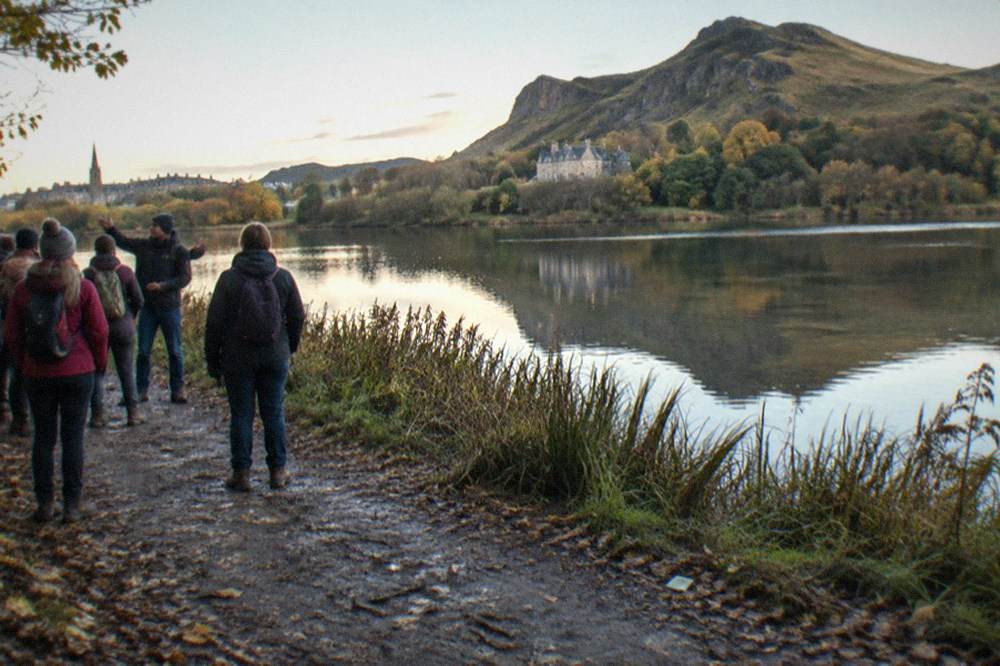
One more free detail worth knowing: the park's stories are packaged in a free audio guide available through the Geotourist app, which the operator recommends for the geology and the prehistoric sites. For a hill this loaded with history, from the Hutton rock sections that helped found modern geology to the Iron Age fort terraces still visible on the eastern flank, a free guide does a lot of work. Our wider rundown of the city's green viewpoints covers the rest of the free outdoor list in free parks, hills and viewpoints in Edinburgh.
Can You Combine Arthur's Seat With A Free Walking Tour?
Yes, and it is the natural pairing: the descent from Arthur's Seat lands you at the foot of the Royal Mile, where the largest concentration of free GuruWalk walks in the city departs. A realistic free day is the climb in the morning, lunch at the lochs, and a two-hour tip-based Old Town walk in the afternoon, with total outlay of nothing but tips and a bus fare.
The geography does the work. Arthur's Seat's western edge sits directly behind the Scottish Parliament and the Palace of Holyroodhouse, and the Royal Mile runs from Holyrood up to the Castle in a straight line. A walker who comes down the hill by early afternoon can be at the top of the Mile, or at any of the meeting points along it, within half an hour on foot. The free walking tour roster in Edinburgh is concentrated exactly there, with meeting points at numbered addresses on High Street, at the Grassmarket and at George IV Bridge. One of the free walking routes passes through here: Harry Potter, Brújula Free Tours.
Language is the one thing to check before reserving. Edinburgh's free-walk market is Spanish-first: of the verified GuruWalk roster, roughly half the walks run in Spanish or Italian only, and the largest single walk on the roster, with 6,470 reviews, is Spanish-language. English speakers should filter for English before booking, and the GuruWalk listing states the language plainly. The best English options include the Local Lad's 2-Hour Walk, rated 4.96 out of 5 across 178 GuruWalk reviews, and the History and Fun Facts Walk, rated 4.9 out of 5 across 20 reviews, both meeting on or just off the Royal Mile.
For visitors who want more than English, the Essential Walk With German Option runs in German, English, French and Italian, is rated 4.76 out of 5 across 2,889 GuruWalk reviews, and meets at 361 High Street, a short walk from the Holyrood end of the Mile. It is the strongest multilingual choice on the roster and a good fit for mixed-language groups coming down off the hill.
Tipping is how these walks are paid for, and it deserves a plain sentence rather than an awkward shuffle. The walk costs nothing to reserve, the guide is paid by tips, and GuruWalk's own guidance suggests contributions of between 15 and 50 euros per participant at the end, with many travellers giving 10 to 15. Nobody is turned away for paying less, and nobody should feel priced out of a free tour. If you want the full economics, our piece on free walking tours in Edinburgh breaks down how the model works, and the question of how much to give is covered in detail there.
What Else Is Free Near Arthur's Seat?
Within a fifteen-minute walk of the summit paths you can visit the Scottish Parliament for free with no booking, stand on Calton Hill at no charge, and enter Collective, the free contemporary art centre on Calton Hill's summit. The paid items nearby are the Palace of Holyroodhouse, the Nelson Monument, which charges even for its ground floor, and the castle at the far end of the Mile. One of the free walking routes passes through here: Witch Burning Walk, Spanish Or Italian.
The Scottish Parliament is the standout. Its own pages promise that you are welcome any time the building is open, Monday to Saturday, with no booking needed for a self-guided visit or the free exhibition, and free guided tours available through its ticketing partner. Watching a debate costs nothing either: tickets can be booked up to a week ahead or collected from the front desk on the day. Few capital cities give away this much of their legislature, and it sits directly under the hill. Details are on the Parliament's visit page.
Calton Hill, a short walk up from the east end of Princes Street, is the other free viewpoint, and it is the one that gives you Arthur's Seat itself in the frame. The hill is open public space with no admission mechanism, and Collective, the art centre in the old City Observatory on its summit, states that it is a free contemporary art centre open daily. The trap on the hill is the Nelson Monument, which is paid at every tier: entry to the monument and tower is £7.50, and even the ground-floor exhibition without the tower costs £3, as published on the operator's Nelson Monument page. Standing on the hill and looking at the monument is free; going inside it is not. One of the free walking routes passes through here: Ghosts And Mysteries, Royal Mile.
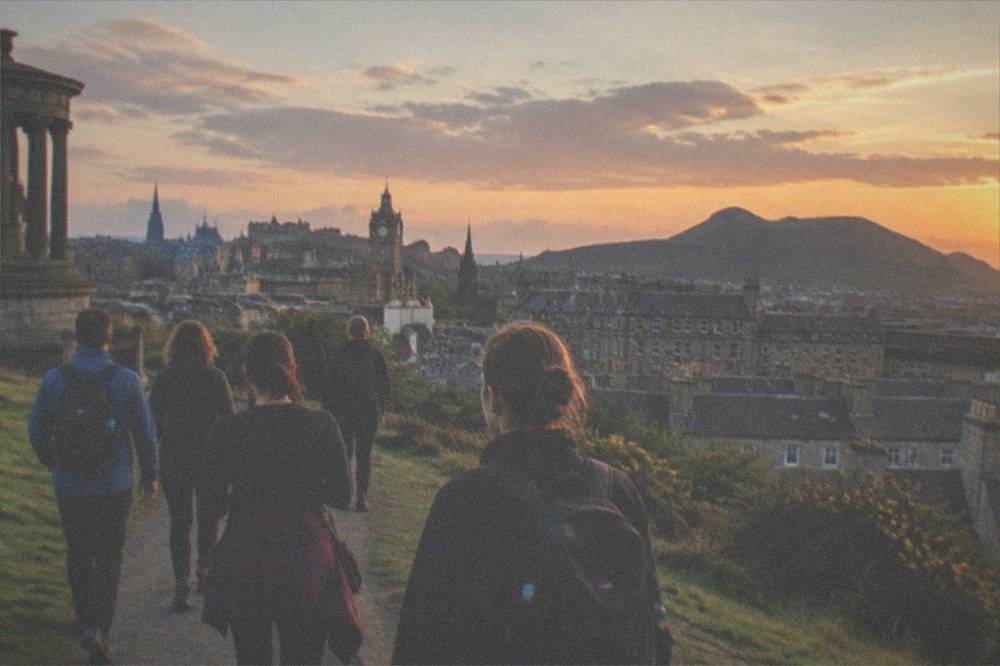
This district, more than any other in Edinburgh, rewards the visitor who checks before assuming. The Old and New Towns have held UNESCO World Heritage status for decades now, and the density of free things inside that boundary is genuinely unusual: two free museum systems, a free parliament, a free art centre on a hill, a free royal park with a volcano in it, and a free kirkyard open around the clock. The paid landmarks are equally famous, which is exactly why the honest answer to almost any "is it free?" question in this city is "check the operator, not the postcard". That is the standard Free Things to Do in Edinburgh applies to every claim on this site, and Arthur's Seat is the rare headline attraction that passes it without a single qualification.
If you are planning the wider day, our free things to do in Edinburgh today guide sequences these stops into a workable route, and the evening options are covered separately for anyone whose climb ends at dusk.
For the afternoon, here are the three strongest English-language free walks to pair with the hill.
Common Questions About Arthur's Seat
Is Arthurs Seat Free?
Yes. Holyrood Park, which contains Arthur's Seat, is free to visit and open 24 hours a day, year-round, in the operator's own published words. There is no ticket, no gate and no booking for the summit climb.
How long does it take to climb Arthur's Seat?
Most walkers reach the summit in 45 to 60 minutes from Dunsapie Loch or St Margaret's Loch, with a similar time back down. Allow two to three hours for the round trip with a loch-side stop and photos.
Is the Radical Road open?
No. The Radical Road is currently closed due to rockfall risk. Consent was granted in May 2026 for works that will partially reopen the South Quarry section, but no reopening date is published, so plan your route around the closure.
Can you drive into Holyrood Park?
The High Road through the park is closed to motor traffic, though pedestrians and cyclists walking their bikes can still use it. Car parks remain available at Dunsapie Loch and elsewhere around the park's edge.
Is Arthur's Seat safe for casual walkers?
Yes, on the main paths and in decent footwear. The hill has seen helicopter rescues in 2026, all on steep ground near the summit or crags, so stick to the worn routes, avoid a wet dusk descent, and carry water and a windproof layer.
Do you need to book anything for Arthur's Seat?
No. Nothing in Holyrood Park requires a booking or a ticket. The free attractions nearby differ: the Scottish Parliament needs no booking for a self-guided visit, while its guided tours are worth reserving in advance.