Self Guided Walking Tour Of Edinburgh: A Free Old Town Route With Dark History Detours
Edinburgh's Old Town is compact enough that one well-planned walk covers the castle esplanade, four free museums, the most famous graveyard in Scotland and the best viewpoint in the city, all without a ticket.
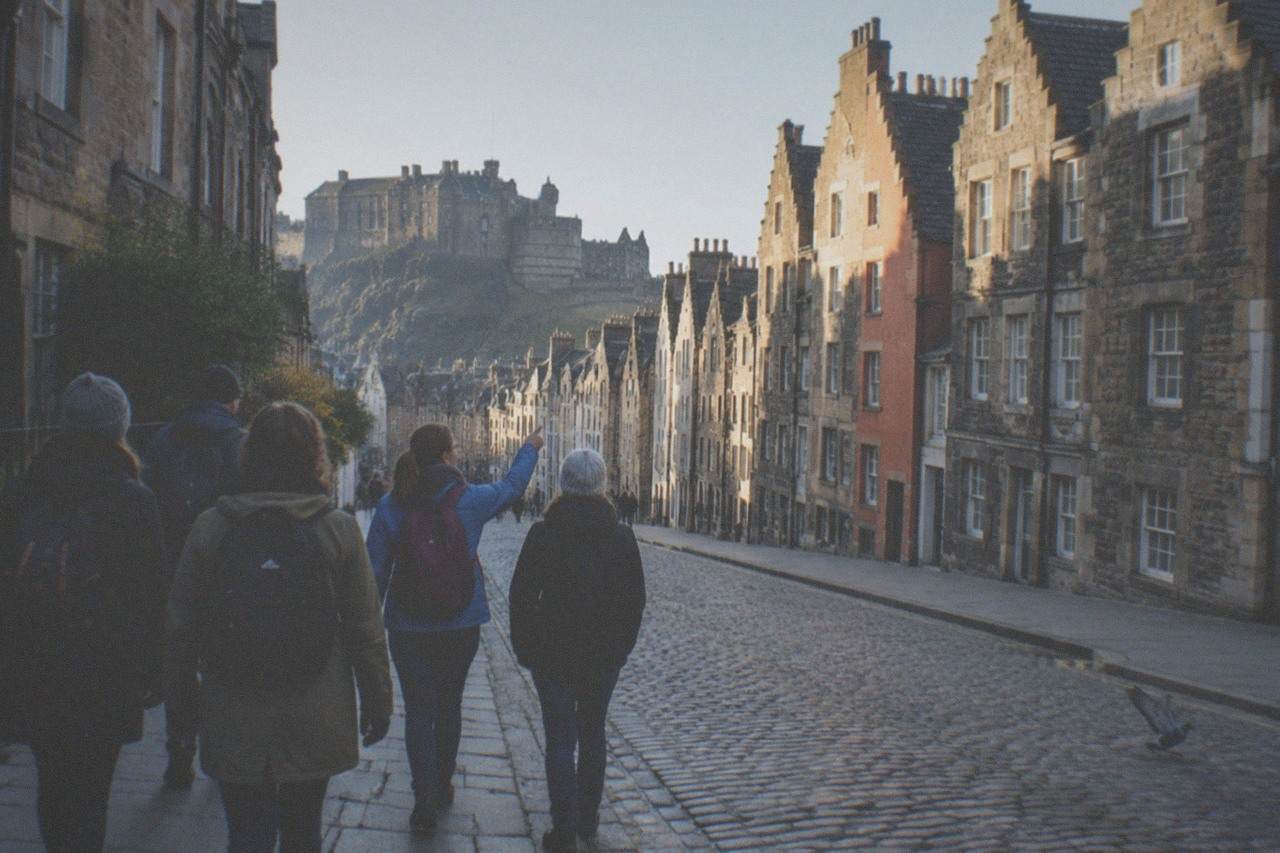
Short answer
A self guided walking tour of Edinburgh works because the Old Town is small: the Royal Mile runs about one mile from castle to palace, four free museums sit on or just off it, and Greyfriars Kirkyard, Calton Hill and Arthur's Seat are all walkable detours. Allow a full day, wear grippy shoes, and expect cobbles, steps and wind.
Edinburgh rewards walkers more than almost any city in Britain. The whole Old Town stacks up on a single volcanic ridge, so one street, the Royal Mile, connects almost everything worth seeing, and the views come free because the city built its viewpoints into the landscape itself. I have walked Scottish towns and hills for years, and what struck me when researching this route is how much of Edinburgh's best material sits within fifteen minutes' walk of one cobblestone spine.
This guide lays out a complete self guided walking tour of Edinburgh: the route itself, the free museums that break up the miles, the dark-history detours the Old Town is famous for, and the practical realities, from Radical Road's closure to the charge now landing at St Giles' Cathedral. Where a guided walk would serve you better, it says so plainly, and every walk named here is a real listing on GuruWalk, run by an independent local guide who is paid by tips rather than an upfront fee.
How Do You Plan A Self Guided Walking Tour Of Edinburgh?
You plan it around the Royal Mile, because that single street carries the route: start at the castle esplanade, work down through the Lawnmarket and High Street, and finish at the Palace of Holyroodhouse, detouring west to Greyfriars and east to Calton Hill as energy allows. The full spine is about a mile, the detours add roughly two more, and four free museums sit along the way for rest stops. Good shoes matter more than a map. This stop sits on a free walking route, Canongate History Walk.
The geography makes the planning simple. Edinburgh Castle sits on its rock at the top, Holyroodhouse at the bottom, and everything in between is a descending sequence of closes, courts and wynds running downhill on either side of the Mile. You do not need to loop back: the walk runs one direction, downhill for most of its length, which is the kindest orientation for legs and lungs alike. The Free Things to Do in Edinburgh principle shapes the whole route, because nearly every stop on it costs nothing to stand in, photograph or enter.
Two paid bookends frame the day, and it is worth being clear about them before you set out. Edinburgh Castle is a paid attraction, £23.50 for an adult ticket bought online, £26 at the gate, and the Palace of Holyroodhouse is likewise paid, £29.70 for an adult advance ticket. Neither belongs on a free itinerary, but both can be seen from outside for nothing, and the walk below treats them exactly that way: as the proscenium arches of a route whose substance is free. One of the free walking routes passes through here: Local Lad's 2-Hour Walk.
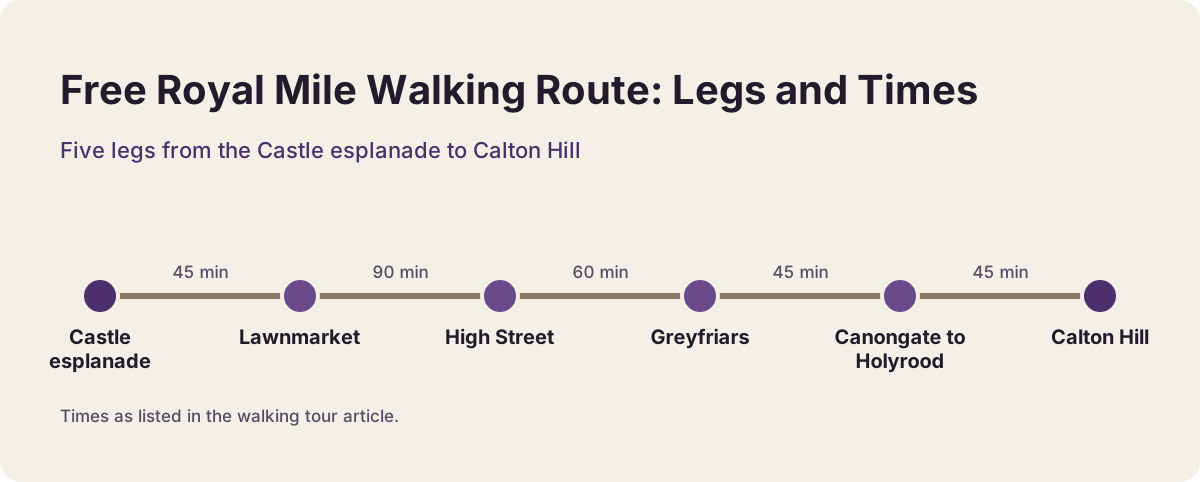
| Leg | Where | What you get free | Rough time |
|---|---|---|---|
| 1 | Castle esplanade to Lawnmarket | Castle views, St Giles' exterior, Gladstone's Land close | 45 min |
| 2 | High Street | St Giles', Old Parliament Hall area, four free museums | 90 min |
| 3 | Greyfriars detour | Kirkyard open 24 hours, free Kirk entry, Covenanters' Memorial | 60 min |
| 4 | Canongate to Holyrood | Canongate Kirk, free People's Story museum, palace exterior | 45 min |
| 5 | Calton Hill finish | City panorama, free Collective art centre | 45 min |
Build the day around opening hours rather than distances. The free council museums along the Mile open seven days a week, 10am to 5pm with last entry at 4.30pm, so a morning start catches them all. Greyfriars Kirkyard never closes, per the Kirk's own site, which makes it the perfect late stop. Calton Hill has no gate to close, so it is the natural sunset finish, and in summer the light up there lasts until absurdly late.
What Is The Best Self Guided Royal Mile Route?
Walk the Mile from the top down: begin at the castle esplanade for the view, pass St Giles' Cathedral mid-route, and end at Holyrood, because walking downhill saves your knees and the storytelling improves as you descend from royal power to the closes where ordinary people lived. The full street is free to walk, it is a public road, and every detour below branches off it. Give the spine itself two unhurried hours.
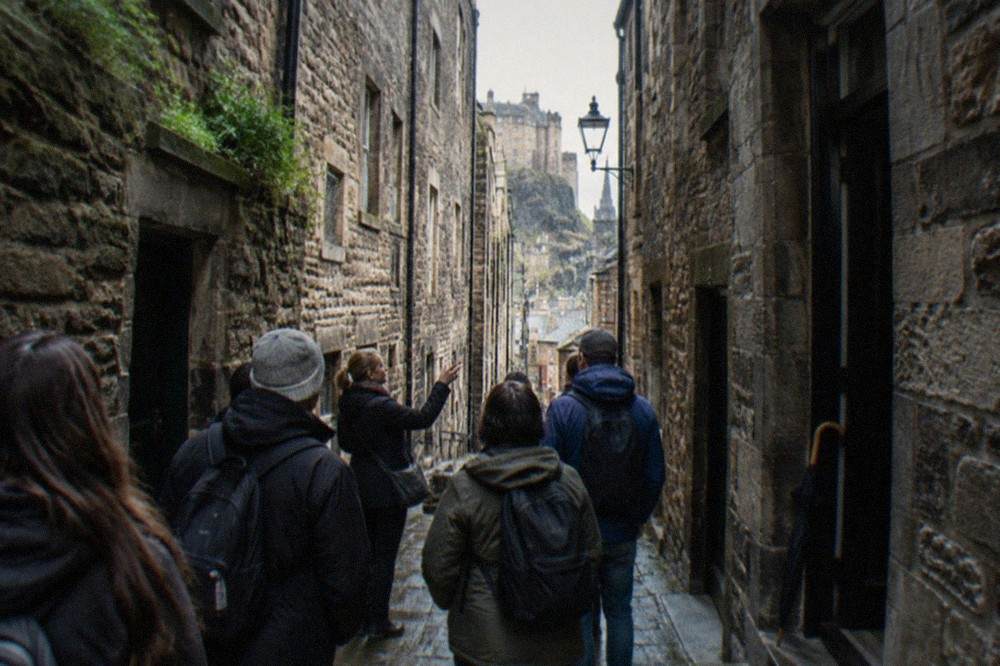
Start at the Esplanade, the flat parade ground in front of the castle. You cannot enter the castle without paying, but the esplanade view across Princes Street Gardens and the New Town costs nothing, and the One O'Clock Gun can be heard from outside the walls when it fires. From there the Mile drops through the Lawnmarket, past the closes that give Edinburgh its vertigo: narrow vertical lanes where tenements once rose ten storeys. Lady Stair's Close, on the left, holds the Writers' Museum, one of the genuinely free museums on the route, open seven days a week.
Mid-route is St Giles' Cathedral, and this stop needs an honest caveat. St Giles' is moving to a £12 visitor charge in September 2026, with free access continuing for residents of Scotland and under-16s. Its own site still shows a donation-based model on one page and the new charge on another, so check before you plan to go inside; the exterior, the Thistle Chapel facade and the Mercat Cross outside cost nothing either way. Worship remains open to all. This stop sits on a free walking route, Essential Walk In Spanish Or Italian.
The lower Mile, the Canongate, is quieter and in some ways better. The People's Story, in the 1591 Canongate Tolbooth, is free to visit and tells the city's history from the street's point of view rather than the palace's. Canongate Kirk's kirkyard holds Adam Smith's grave. The Scottish Parliament sits opposite, and a self-guided visit there is free with no booking needed, per the Parliament's own visit pages, which also note the building welcomes walk-ins Monday to Saturday. That is a rare thing in a capital city, and it slots perfectly into a self guided day because you need no reservation.
If a day of self guiding sounds like hard work, the guided alternative is worth knowing about. This site lists 25 free GuruWalk walking tours in Edinburgh, in English, Spanish, Italian, French and German, with departures spread from 9.30am to 8pm, so the tip-based format covers this exact ground with someone else doing the storytelling. The trade-off is simple: a self guided route goes at your pace and costs nothing, a guided walk adds depth and answers.
For the record, the three walks above are the strongest English-language fits for this route's ground: a two-hour essentials walk rated 4.99 out of 5 across 2,282 GuruWalk reviews, a history-and-fun-facts walk rated 4.9 out of 5 across 20 reviews, and a two-hour history walk rated 4.73 out of 5 across 22 reviews. All three are free to reserve, with the guide paid by what you choose to give at the end. GuruWalk's own guidance suggests contributions of between 15 and 50 euros per participant, but the amount is genuinely your call.
Where Does The Dark History Fit Into The Walk?
Greyfriars Kirkyard is the anchor: branch west off the Mile at the halfway point and you get the Covenanters' Memorial, the Greyfriars Bobby statue and a graveyard open 24 hours a day, all free. From there the ghost ground extends to the Grassmarket, where executions were held, and the closes where body snatchers once worked. Give this detour a full hour and do not rush the kirkyard. This stop sits on a free walking route, Essential Historical Walk, Spanish.
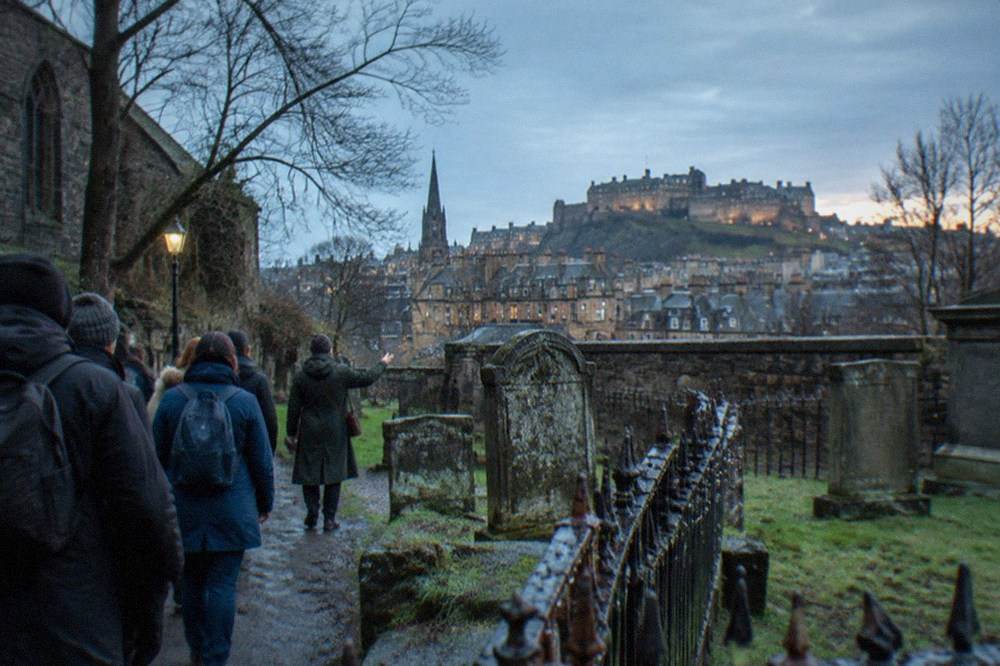
Greyfriars is where Edinburgh's dark history stops being a theme-park costume and becomes a real place. The Kirkyard is open to visitors 24 hours a day, 365 days a year, according to Greyfriars Kirk's own site, and it holds the Covenanters' Prison, where hundreds of prisoners died in the 1670s. The prison gates have been chained in recent years to protect the graves, and access is now arranged through the council's bereavement team or through the free tours and open days the Friends of Greyfriars Kirkyard run. The Kirk building itself is free to enter, donations encouraged, though it closes to general visitors on many August days when it becomes a Fringe venue.
The Bobby angle is the gentler face of the same corner. The statue of Greyfriars Bobby, the Skye terrier who supposedly spent 14 years by his master's grave, stands at the junction of Candlemaker Row and George IV Bridge, and it is one of the most-photographed free sights in the city. A guided walk that leans into this side of the Old Town is the 2-Hour Walk With a Famous Dog, an English-language GuruWalk listing rated 4.99 out of 5 across 2,282 reviews, which meets at 33 George IV Bridge, a two-minute walk from the statue itself. It is the highest-reviewed English walk on the roster and it covers exactly the ground you are standing on.
From Greyfriars, drop down to the Grassmarket, the old execution and market square beneath the castle rock. The Covenanter's Memorial stands there, and the square's pubs now occupy the site of a gallows that worked for centuries. This is the natural place to decide how dark you want the day to be: the daylight version is a pleasant square with a brutal history, and the evening version, done after dark with the closes unlit, is genuinely atmospheric.
Edinburgh's ghost trade is large, and self guiding it is harder than self guiding the Royal Mile because the good material is in the telling. The Old Town's body-snatcher history, the resurrection men who supplied the anatomy schools of the 1820s, centres on the closes around the Grassmarket and the Surgeons' Square area. Surgeons' Hall Museums itself is a paid attraction, £10 for adults, so the honest free version is the streets and kirkyards where the trade happened, plus the story, which a guide supplies far better than a plaque does.
Which Free Museums Break Up The Route?
Four sit on or just off the Royal Mile and all are free to enter: the Writers' Museum in Lady Stair's Close, the Museum of Edinburgh on Huntly House, the People's Story in the Canongate Tolbooth, and the City Art Centre off Princes Street, which is generally free though some temporary exhibitions charge. All open 10am to 5pm, seven days a week, with last entry at 4.30pm, so they slot into the walk as rest stops with content.
The Writers' Museum is the best of them for a walking day, because it is small, free, and directly on the route. It celebrates Burns, Scott and Stevenson, and its courtyard, Makars' Court, is an open public space with inscribed stones honouring Scottish writers. The Museum of Edinburgh, a few hundred metres further down, holds the city's own collection, including the collar of Greyfriars Bobby, which ties the museum neatly to the kirkyard detour. The People's Story completes the set, telling the city's social history from the working end of society. This stop sits on a free walking route, Essential Walk With German Option.
| Museum | Where on the route | Free status | Best for |
|---|---|---|---|
| The Writers' Museum | Lady Stair's Close, Lawnmarket | Free entry, seven days a week | Burns, Scott, Stevenson |
| Museum of Edinburgh | Huntly House, Canongate end of High Street | Free entry, seven days a week | Bobby's collar, city history |
| The People's Story | Canongate Tolbooth | Free entry, seven days a week | Ordinary Edinburgh lives |
| City Art Centre | Market Street, off Princes Street | Generally free, some exhibitions charge | Scottish art, escalator access |
| Collective, Calton Hill | Top of Calton Hill | Free contemporary art centre | Art with the best view in the city |
One caution from the research file: the Museum of Childhood, also on the Mile, is not verified as free in the same way its siblings are, because its operator's own page does not state an admission rule the way the others do. Check before you count on it. The National Museum of Scotland, a short walk off the route behind Greyfriars, is free general entry with charges for some special exhibitions, and it is big enough to swallow an entire afternoon, so treat it as a rain-day alternative rather than a stop. A free walk covers this ground: 3-Hour Old Town History, Spanish.
The National Galleries deserve a mention for the same reason. The Scottish National Gallery on the Mound offers free general admission, with charges for some exhibitions, currently £3.50 to £14 for ticketed shows, and the galleries are open daily 10am to 5pm. If your walk day turns wet, the free-museum cluster around the Mile and the Mound is the fallback, and the free museums guide covers it in depth.
How Do You Finish The Walk: Calton Hill Or Arthur's Seat?
Finish on Calton Hill, because it is the closer, easier and better-sited ending: the climb from the bottom of the Mile takes about ten minutes, the summit is a public space with no admission, and it delivers the classic Edinburgh panorama of castle, Old Town and Arthur's Seat in one frame. Arthur's Seat is the bigger climb, free and open 24 hours, but it adds a serious hill to an already long day.
Calton Hill is the photographer's summit for a reason. The National Monument, the unfinished Parthenon-lookalike, the Dugald Stewart Monument and the old City Observatory all share the top, and the Observatory building now houses Collective, a free contemporary art centre open into the afternoon. Two things on the hill are not free, and the distinction matters: the Nelson Monument charges £7.50 for entry and tower, £3 for the ground floor alone, with no free tier, so admire it from outside. The hill itself, the monuments' exteriors and Collective cost nothing.
Arthur's Seat, the extinct volcano in Holyrood Park, is the stronger walk if your legs still want more. Historic Environment Scotland's own page states that Holyrood Park is open 24 hours a day, year-round, and free to visit, which makes it the strongest free claim in the city. Two closures to carry: the Radical Road path is currently closed due to rockfall risk, and the High Road is closed to motor traffic, though pedestrians and dismounted cyclists can still use it. Do not plan a Radical Road circuit into your day.
| Ending | Climb | Time from Mile's end | Cost | Watch out for |
|---|---|---|---|---|
| Calton Hill | Gentle, stepped path | 10 minutes | Free | Nelson Monument is paid, £7.50 |
| Arthur's Seat | Strenuous, 30-45 minutes up | 25 minutes' walk to park edge | Free, open 24 hours | Radical Road closed; wear real shoes |
| Portobello Beach | Flat promenade | Bus or 75-minute walk | Free public beach | A day out in itself, not a detour |
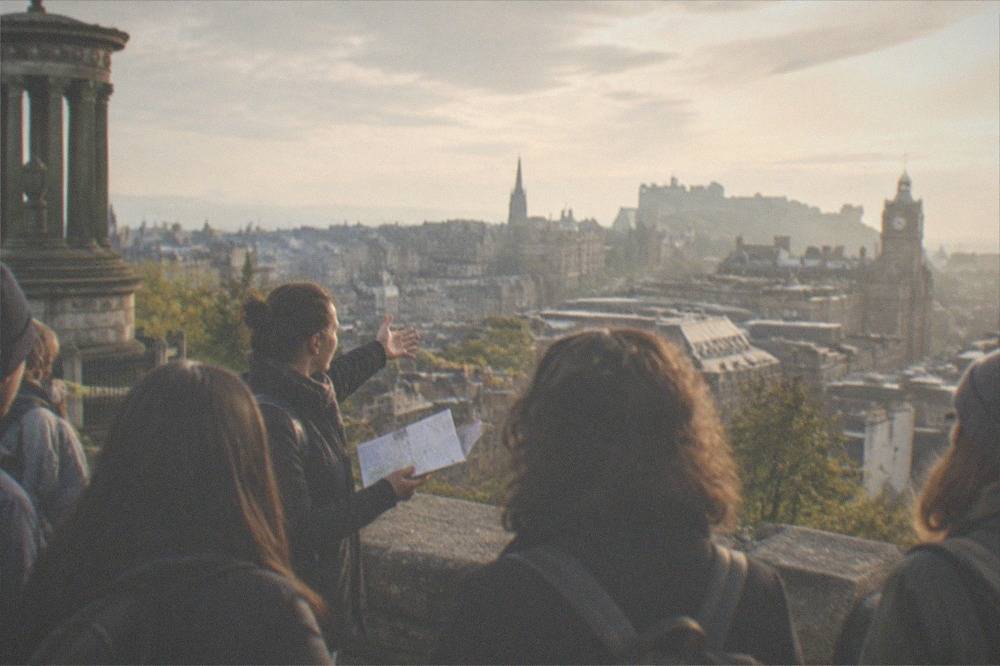
If the day has gone well and you want the sunset finish, Calton Hill wins on logistics: you can be back down and in a pub on Princes Street within fifteen minutes of the light going. Arthur's Seat's summit is a wilder, better view, but the descent in failing light is not the place to discover that your shoes were chosen for looks. Mountain rescue teams and the coastguard helicopter have all worked incidents on Arthur's Seat this year, which tells you the hill deserves proper footwear even in summer. This stop sits on a free walking route, Witch Burning Walk, Spanish Or Italian.
When Is A Guided Walk Better Than A Self Guided One?
A guided walk is better when the value is in the telling: ghost stories, body snatchers and the closes' hidden history mostly live in a guide's voice, not on plaques, and the Old Town's multilingual walks matter if English is not your strongest language. A self guided route is better for pace, price and photography stops. The honest split is: do the Mile yourself, take a guide for the dark stuff.
The economics are worth stating plainly. A self guided day costs bus fare and nothing else. The guided walks on GuruWalk are free to reserve, and the guide is paid by tips, with GuruWalk's own guidance suggesting a contribution of between 15 and 50 euros per participant at the end. Nothing is required upfront, and a visitor who genuinely cannot tip is not turned away; the model depends on the many, not on a fixed fee from each. For comparison, paid ghost tours in the city run £15 to £17 for one to 1.5 hours, so the free-walk format is a real saving, not a discount trick.
Language is the other honest split. Edinburgh's free-walk market is Spanish-first, and several of the biggest walks on GuruWalk run in Spanish only, which is worth knowing before you reserve anything. If German, French or Italian suits you better than English, the multilingual options are strong: the Essential Walk With German Option, rated 4.76 out of 5 across 2,889 GuruWalk reviews, runs in German, English, French and Italian and meets at 361 High Street, right on this route's spine.
For a purely local voice on the Royal Mile ground, the Local Lad's 2-Hour Walk, rated 4.96 out of 5 across 178 GuruWalk reviews, is an English-language listing that meets at 142 High Street. Its review pool is a fraction of the biggest walks' sizes, which is worth knowing when you read the rating, but the feedback it has is close to unanimous. The Old Town free walking tours guide compares the full field, including the Spanish-only options, walk by walk.
What Practical Tips Make The Walk Work?
Wear shoes with grip, because the cobbles are polished smooth and get treacherous in rain; start before 10am to have the closes to yourself; and carry a layer, because the wind on the ridge and the hills is a different climate from the streets below. Check museum hours the night before, since Culture Edinburgh leaves stale closure notices on its venue pages, and do not plan around any single opening time you read here or anywhere else.
Timing matters more in Edinburgh than in flatter cities. The closes and vennels photograph best before the crowds build, and the light on the Royal Mile in the early morning is softer than the harsh midday contrast the tenements create. Weekday mornings are the quiet window; the Mile on a summer afternoon is a river of people, and Greyfriars Kirkyard, which never closes, is far better at 8am or after dinner than at midday. A free walk covers this ground: 2-Hour Walk With A Famous Dog.
| Condition | Adjustment |
|---|---|
| Rain | Swap the hills for the free museums; the Writers' Museum and City Art Centre are the driest links |
| Summer festival month | Expect Fringe crowds; Greyfriars Kirk closes to general visitors many August days |
| Winter | Daylight runs roughly 9am to 4pm; Calton Hill for sunrise or lunch, not sunset |
| With kids | Shorten to Mile plus Calton Hill; the Bobby statue and the People's Story are the kid-friendly anchors |
| Late September | Doors Open Days, 26 and 27 September, opens over 100 buildings city-wide for free |
That last line deserves its own moment. Doors Open Days is a free public festival every September, and in 2026 Edinburgh's weekend is 26 and 27 September, when more than 100 venues across the city open their doors at no charge, per the organisers at doorsopendays.org.uk. If your visit lands on that weekend, buildings that are normally closed or paid join the free itinerary, and some individual venues ask you to book ahead, so check each listing. Edinburgh Castle is not part of it.
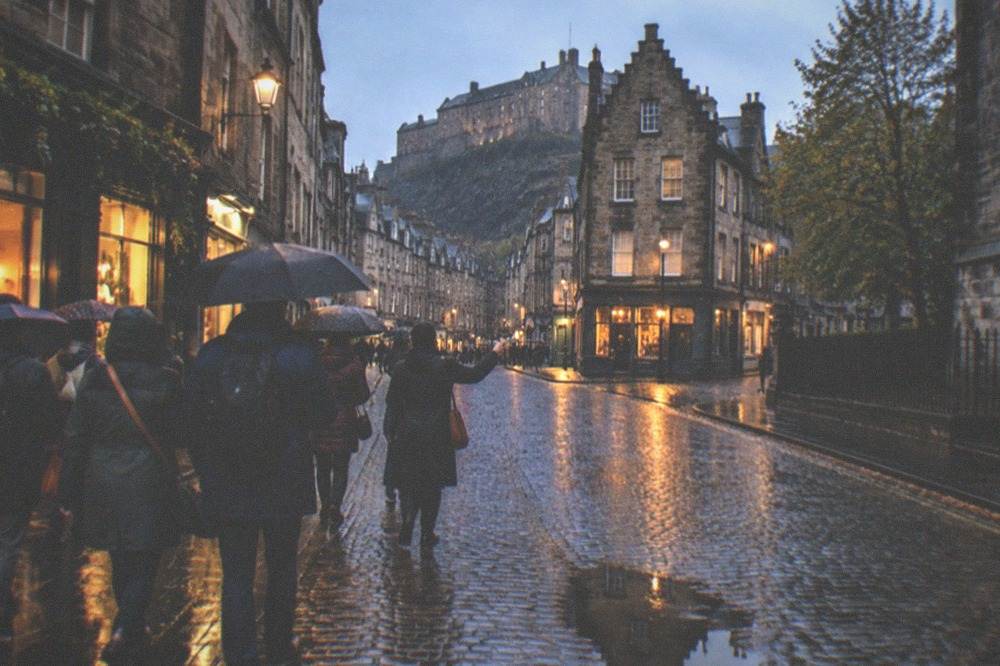
Rain is not a cancellation, it is a reroute. The rainy day guide covers the full indoor field, but the short version for this walk is: the free museums carry the middle of the day, the National Galleries cluster on the Mound absorbs an hour, and the kirkyards are actually better in drizzle, because the stones photograph beautifully wet. Save Calton Hill for a clear spell, since the summit is exposed and the view is the entire point.
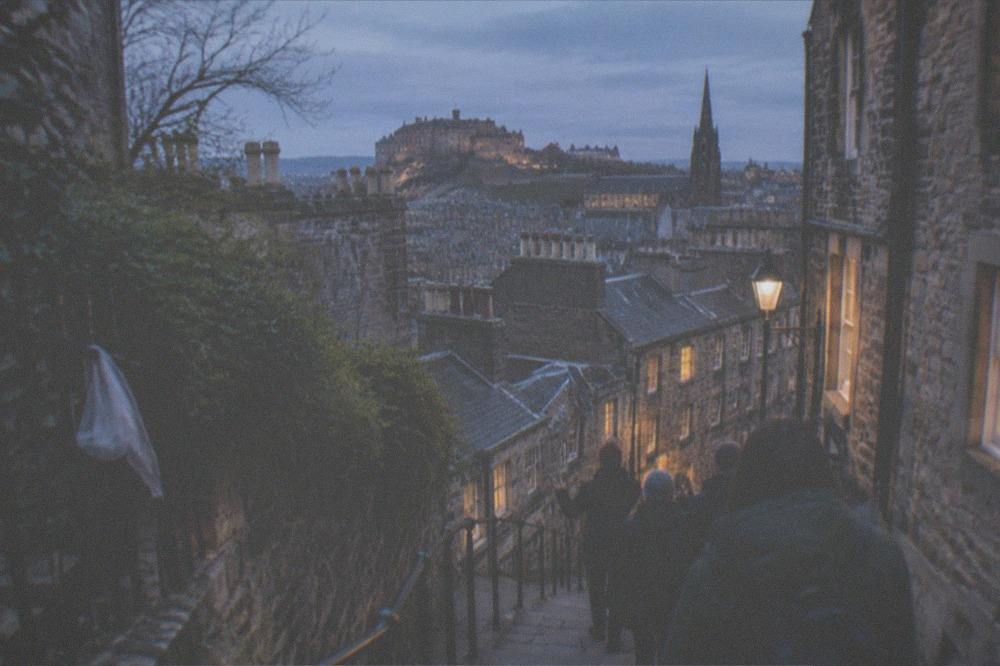
If the dark-history half of this walk is what drew you in, the guided versions are where that material pays off, and the strongest English-language options are below. The Ghosts and Mysteries walk, rated 4.51 out of 5 across 176 GuruWalk reviews, runs in English, Spanish and Italian; the Body Snatchers walk, rated 4.93 out of 5 across 56 reviews, is a shorter 1h45 English listing that meets at the Grassmarket; and the Harry Potter Walk With a Dog, rated 4.99 out of 5 across 112 reviews, is a 1h30 English option for the Potter ground around Candlemaker Row. The free ghost tours guide covers the full dark roster, including the Spanish-only listings that dominate the field by review volume.
Common Questions About Self Guided Walking Tours Of Edinburgh
Can you walk Edinburgh's Old Town without a tour?
Yes, entirely. The Royal Mile is a public street, three Royal Mile museums are free (the Museum of Edinburgh, the Writers' Museum and the People's Story), Greyfriars Kirkyard is open 24 hours and Calton Hill is an open public space, so a self guided route covers the essential ground without any booking or fee. A guide adds storytelling, especially for ghost history, but nothing on the route requires one.
How long does a self guided walking tour of Edinburgh take?
The Royal Mile spine takes about two unhurried hours, the Greyfriars detour adds an hour, the free museums can absorb another two depending on how many you enter, and the Calton Hill finish takes 45 minutes. A full day with everything is realistic; the bare route, esplanade to Holyrood without detours, is a mile of walking.
Is the self guided route suitable for children?
The shortened version is: the Mile itself, the Greyfriars Bobby statue, the People's Story museum and Calton Hill make a good family day, all free. Greyfriars Kirkyard is atmospheric rather than frightening in daylight. Arthur's Seat is a longer, steeper proposition better saved for older children with proper shoes.
What should you skip if you only have half a day?
Keep the esplanade view, St Giles' exterior, Greyfriars Kirkyard and Calton Hill, and drop the museum interiors and the Canongate's lower stretch. That compressed loop still delivers the castle view, the dark history and the panorama, and it fits into three hours at a steady pace.
Do you need to book anything on a self guided tour of Edinburgh?
Almost nothing. The free museums need no booking for individuals, the kirkyard and hills are open access, and the Scottish Parliament needs no booking for a self-guided visit. The paid castle and palace are the exceptions: both sell out in summer, and the castle's own advice is to book online in advance or risk no entry at all.
Are the guided walks mentioned here actually free?
They are free to reserve on GuruWalk, and the guides are paid by tips at the end rather than an upfront price. GuruWalk's own guidance suggests a contribution of between 15 and 50 euros per participant, but the amount is your choice and nothing is collected when you book. The self guided route above costs nothing at all.