How Much Should I Pay For A Free Walking Tour?
The honest answer to what a free walking tour in Edinburgh costs: what GuruWalk publishes, what guides actually receive, and how to decide your own contribution.
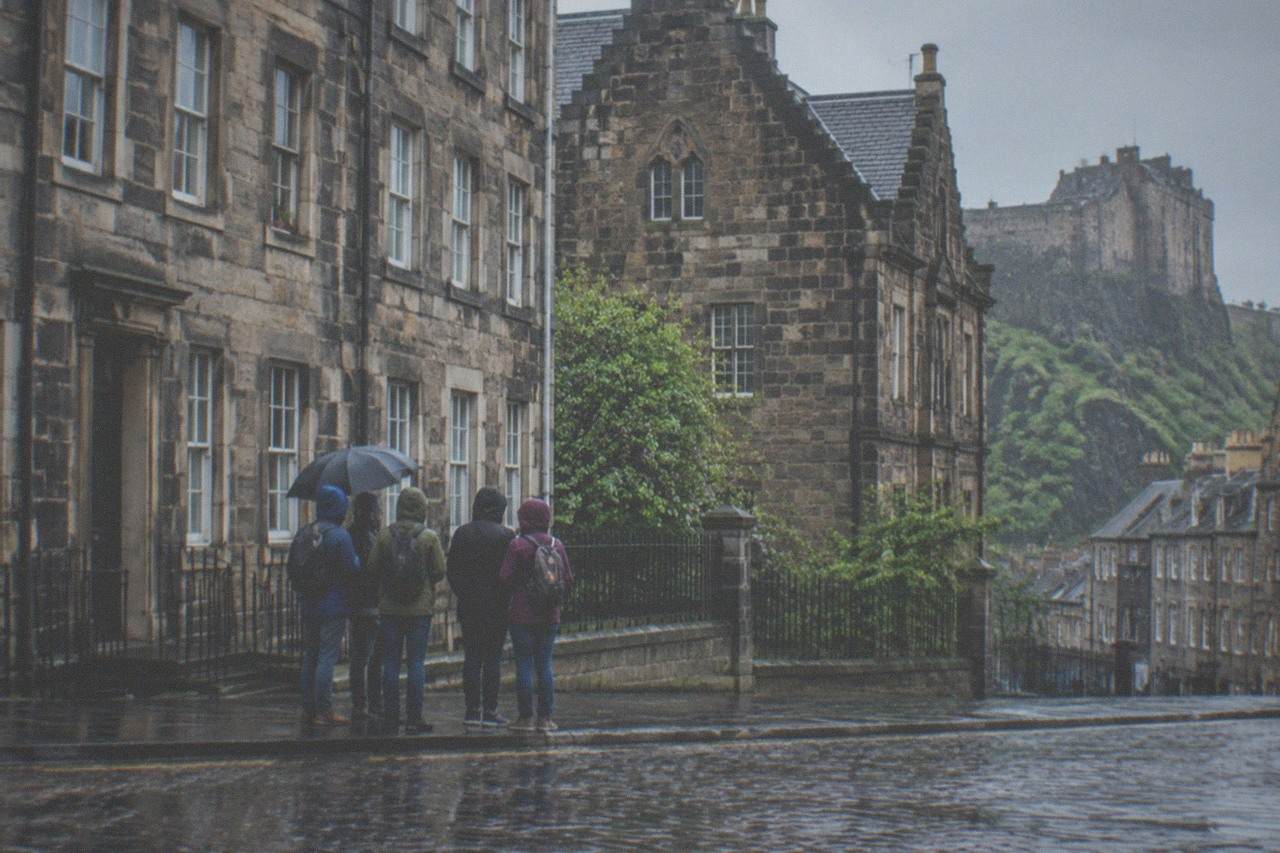
How Much Should I Pay For A Free Walking Tour?
Nothing is owed and nothing is charged: a free walking tour in Edinburgh costs £0 to reserve and £0 to join, and the guide is paid only by what guests choose to hand over at the end. GuruWalk, where Edinburgh's free walks are listed, recommends a contribution of €15 to €50 per participant.
That range is wider than most people expect, and it is not a price list. It is GuruWalk's own published recommendation for its Edinburgh walks, and it sits alongside a second, humbler figure from the same company's blog, which notes that many travellers give between €10 and €15 per person. Both numbers are real and both come from the operator, which is exactly why this page exists: the question has an answer, but the answer is a range published by the people running the walks, not a fixed tariff enforced at the gate.
I went looking for what is actually published rather than what gets repeated in travel forums, and three things became clear quickly. First, no Edinburgh free walk charges anything up front; the reserve button takes a booking, not a payment. Second, the guide is an independent operator who is paid by tips and by nothing else. Third, almost every argument about "the right amount" online is a translation of one of these two published figures, usually with the source stripped off.
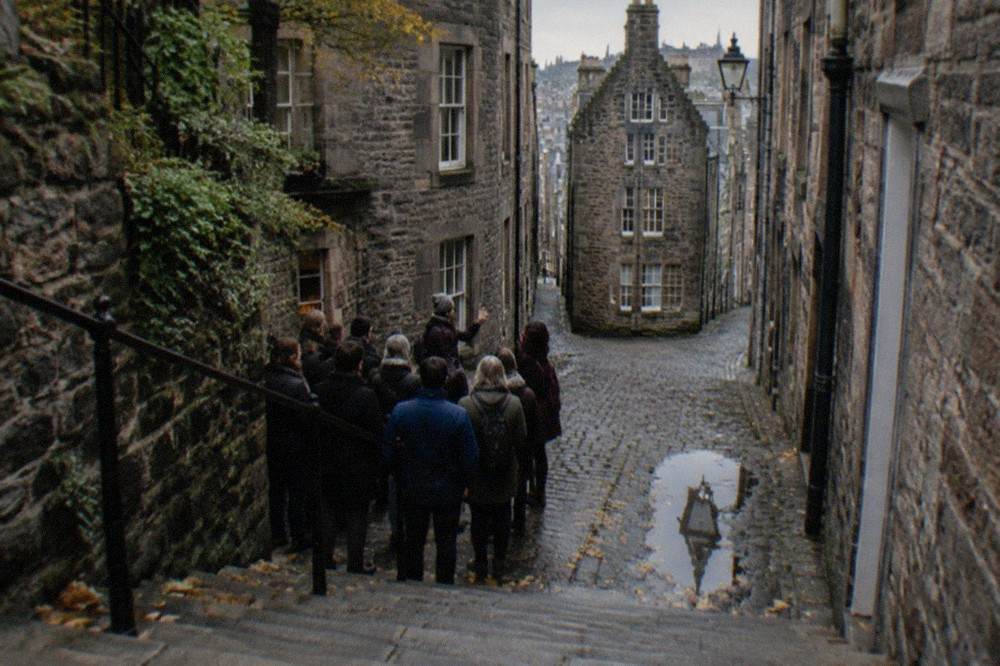
The mechanics are explained in full in how free walking tours actually work, but the short version matters here because it explains the range. A guide on Free Things to Do in Edinburgh's roster might walk eight people on a wet Tuesday or thirty on a sunny Saturday, and the tip pool is the entire wage for those two hours. The recommended range is wide because the operator is telling you to scale it, not to pay a flat fee.
There is a second reason the range is wide, and it is the one people forget. A walk in August, when the city is swollen with festival crowds and every guide is running multiple sessions a day, is a different product from a walk in a quiet February with four hardy guests. The guide running the February walk may have spent longer preparing for you than with you. The guide in August is performing at volume. Neither expects the same number, and the published band leaves room for both realities without the operator having to say so out loud.
If you want the shortlist of walks this site points at, these three are the English-language essentials on GuruWalk, all free to reserve:
How The Tip Actually Reaches The Guide
Every penny you hand over goes to the person who walked you around, and the law that governs restaurant tipping does not apply to them. Free-tour guides on GuruWalk are independent operators, so the UK statutory code on tip distribution, which binds employers, does not cover them at all. Your contribution is a direct gift, not a service charge passing through a payroll.
That legal detail is worth a moment because it changes what your money is. The revised statutory Code of Practice on the fair distribution of tips, published by the UK government following the Employment Rights Act 2025, requires employers to consult workers on tipping policies. But Acas, the workplace advisory body, states plainly that the Employment (Allocation of Tips) Act 2023 and its code do not cover self-employed workers. A free-tour guide is self-employed. There is no employer skimming, splitting or allocating: what you give is what they keep, before their own costs.
This is also why the walk stays genuinely free at the point of entry. The guide has no salary from the GuruWalk listing, no cut of a booking fee, no commission on anything you might buy afterwards. The statutory code exists because tipping money elsewhere in hospitality often takes a winding path to the worker; on a free walk the path is one step long.
So when you are deciding your number, you are not deciding whether to top up a corporation. You are setting the hourly rate for a self-employed local who spent two hours with you, and who will pay their own insurance, their own research time and their own Edinburgh rent out of the envelope. That framing tends to make the decision easier, not harder.
It also explains why the good guides treat the request at the end as a straightforward part of the job rather than an awkward apology. A guide who explains the model clearly at the start of the walk, that the tour is free, that they are independent, and that they are paid by whatever the group chooses to give, is not being pushy. They are being honest about their wage structure, and the groups that hear that framing tend to give more freely than the groups left to work it out at the goodbye.
What The Operators Themselves Publish
GuruWalk's Edinburgh page recommends a contribution of €15 to €50 per participant; its blog notes that many travellers give €10 to €15; and a UK and Ireland tipping guide published the same month puts a fair tip at £10 to £15 per person. No Edinburgh walk states a required amount, and no guide on the roster is permitted to demand one.
Those are the only figures worth quoting, because they are the only ones with a named source behind them. Here they are side by side:
| Published source | What it says | What it is |
|---|---|---|
| GuruWalk's Edinburgh listing page | Contribution of €15 to €50 per participant at the end | The platform's own recommendation for this city |
| GuruWalk's blog on free tours | Many travellers give €10 to €15 per person | The observed typical band, in the operator's words |
| A UK and Ireland free-tour tipping guide | £10 to £15 per person is fair | A regional guideline, not an Edinburgh rule |
Notice what is missing: anyone saying "you must". The three sources agree on a floor of roughly ten in whatever currency you are carrying, and they disagree on the ceiling, which is a disagreement you are meant to resolve yourself. A two-hour walk that held your attention sits near the top of the band. A walk you left early sits near the bottom or at nothing, and that is a legitimate outcome too.
The quality signal worth paying for is visible before you book. The 2-Hour Walk With a Famous Dog, an English-language walk meeting at 33 George IV Bridge, is rated 4.99 out of 5 across 2,282 GuruWalk reviews, which is the largest review pool of any English walk on the roster. A guide with that volume of feedback has been tipped by thousands of people, and the reviews are the closest thing this market has to a published price signal: guests describe what they got, and the rating holds up.
Language Changes The Answer, And Edinburgh Is A Spanish-First City
Edinburgh's free-walk market is Spanish-first: of 18,372 total GuruWalk reviews across the city's walks, 12,485 sit on non-English tours and only 5,887 on English ones, and the single largest walk on the roster runs in Spanish and carries 6,470 reviews. If you are tipping on an English walk, you are in a smaller pool, and the guide's pitch is aimed squarely at you.
That fact surprises people who assume English is the default. It is not, and it matters for your decision because the English-language walks compete hard for a smaller audience, and the best of them earn their ratings guest by guest. The Essential Walk With German Option, meeting at 361 High Street, runs in German, English, French and Italian and is rated 4.76 out of 5 across 2,889 GuruWalk reviews over two hours. It is a genuine multilingual operation rather than an English tour with a translated page.
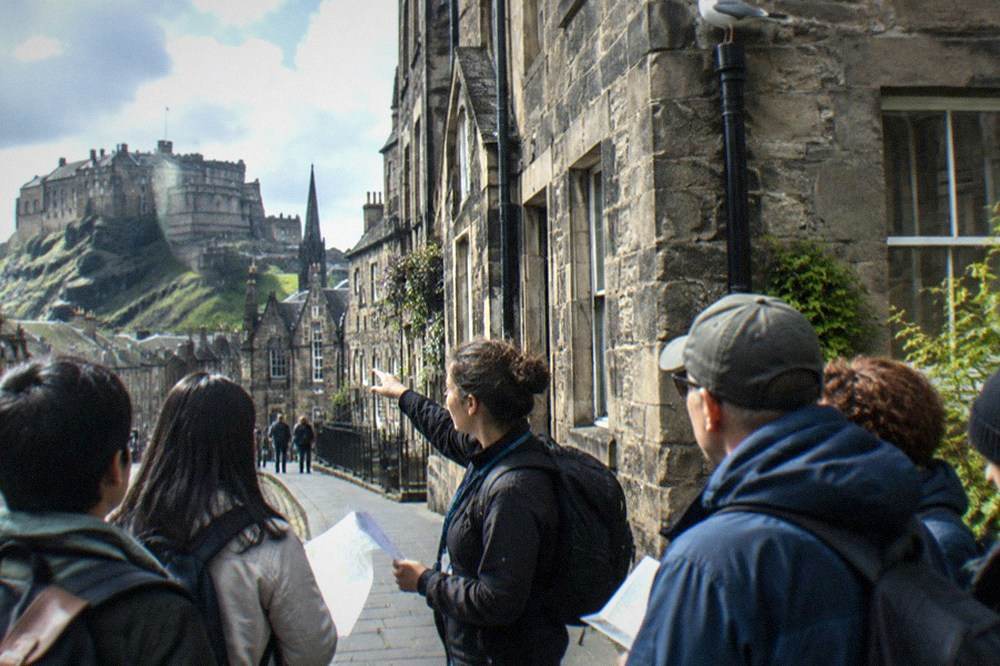
The practical point for your wallet: check the language before you reserve, not before you tip. A Spanish-only walk described vaguely will waste a morning for an English speaker, and no amount of generosity at the end fixes a tour you could not follow. Every walk's language is stated on its GuruWalk listing, and this site states it every time a walk is named. The walks in other languages have their own guide to non-English free tours if you are travelling with someone whose English is stronger in theory than on a windy street corner.
There is a tipping consequence to the language split that nobody publishes but every guide knows. An English walk in Edinburgh draws an international crowd with wildly different tipping norms, from countries where tipping is routine to countries where it is barely practised. The guide has to earn across all of those expectations in a single two-hour session. It is one more reason the published recommendation is a range rather than a number: the operator cannot know which norms are in the circle on any given morning.
What Happens If You Cannot Or Do Not Tip
Nothing happens, and nothing should. The walk is free to reserve and free to join, no guide on the roster may demand a payment, and a guest who cannot tip is still welcome on the walk. The published ranges are recommendations for people who can pay, not a test anyone has to pass at the end.
This deserves saying plainly because the anxiety is real. The tip is the guide's wage, so the request at the end of the walk is honest and direct, and some guides are more direct than others. But the structure of the product, on GuruWalk and everywhere else in this market, is that entry costs nothing and the contribution is voluntary. A student with £3, a family counting coins at the end of a trip, a walker who hated the route: all of them were entitled to be there.
There is a cash angle worth knowing before your walk rather than after it. Cash accounted for 8% of UK payments, but Scotland behaves differently: 40% of Scots sometimes or often carry cash specifically to control spending, and free-tour guides are one of the reasons the habit survives. Some guides carry card readers, but many do not, and the fastest way to be stuck at the goodbye is to have only a phone. Take out what you are prepared to give before the walk starts, and the last two minutes stay pleasant.
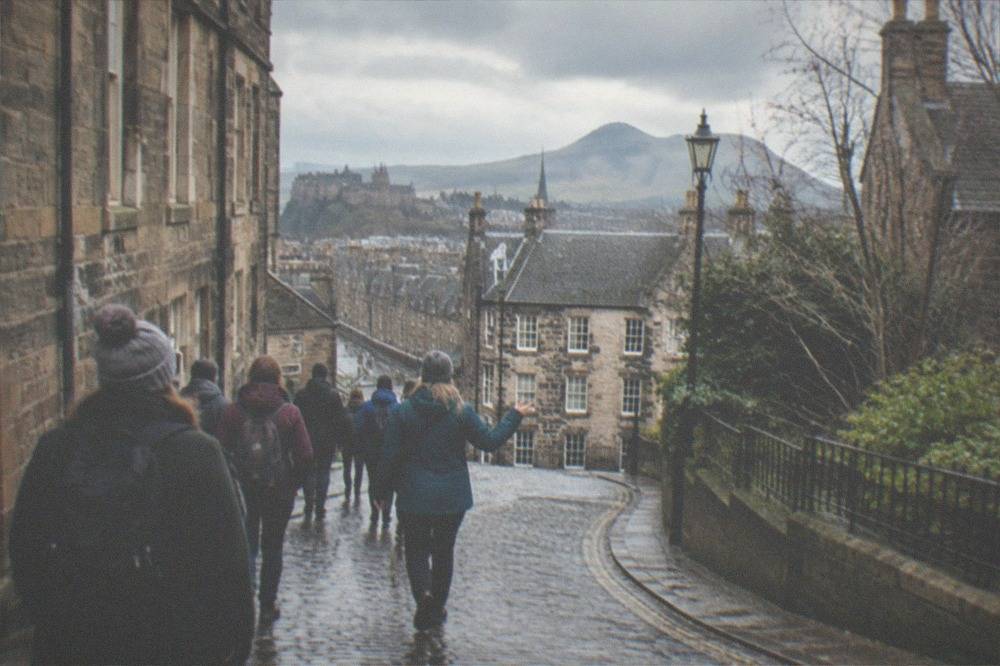
The one behaviour that genuinely damages the system is not under-tipping. It is booking a seat and not turning up, which costs the guide nothing in fees but costs them a spot someone else wanted. A no-show is the only part of this arrangement where you take something without giving anything back: the guide prepared, the guide showed up, and the seat sat empty. If your plans change, cancel the booking; it is free, it takes a minute, and it is the part of the transaction where you actually owe something.
It is also worth separating the two things that get muddled in forum arguments. Choosing not to tip after a walk you disliked is a legitimate market signal, and the guide will read it as one. Choosing to tip nothing after a walk you enjoyed, purely because you hoped nobody would notice, is a different act, and the guide will notice that too. The system only works when the money follows the judgement, in both directions.
How To Decide Your Own Number
Start from the published band, roughly £10 to £15 per person as the fair-tip floor in the UK and Ireland, then adjust for three things: how long the walk ran, how well the guide held the group, and what the walk was worth to you compared with a paid alternative. A themed paid walk in Edinburgh runs from £15 to £17 for one to one and a half hours, which is a useful ceiling for comparison.
That last figure is the most useful number on this page and the least quoted. Local operators list paid ghost and themed walks at £15 to £17 for an hour to ninety minutes. Your free walk was two hours. If the guide was good, the honest comparison is not "what did I get for nothing" but "what would this have cost as a ticket", and the answer is somewhere north of £20. If the guide was poor, the answer is a fiver and a polite thank you, and the market absorbs both.
A quick way to work it in your head before the walk ends:
| The walk you got | A fair response |
|---|---|
| Two hours, guide answered questions, you would recommend it | The top of the published band, given gladly |
| Fine but generic, or a route you already knew | The middle of the band |
| You left early, or the guide was late or rushed | Whatever you feel, including nothing |
| Money is genuinely tight this trip | A small amount and a thank you; the seat was free |
One habit worth copying from regulars: decide the number at the halfway point, not at the goodbye. By then you know whether the guide is earning the band, and you can listen to the second half as a guest rather than as an auditor. It also removes the worst part of the transaction, which is doing arithmetic while someone is thanking you for coming. A guide who sees a guest reach for a wallet mid-walk and relax is a guide who will finish the tour well, and you will hear the better version of the last hour because of it.
Group size is the last variable, and it cuts both ways. On a crowded walk the individual share of the guide's afternoon can be small and still add up to a fair wage; on a walk of four, each person's contribution carries much more of the guide's day. The published band does not ask you to calculate this precisely, but it is the reason the same £10 can be generous in one circle and thin in another. Pay for the walk you actually received, and let the guide's arithmetic be their own.
The question of what happens when you give nothing has its own full answer on what happens if you don't tip, and it is less dramatic than the forums suggest.
If you are still choosing a walk to tip on, these are the three this site would point an English speaker at first:
Common Questions About Free Walking Tour Tipping
How Much Should I Pay For A Free Walking Tour?
GuruWalk, where Edinburgh's free walks are listed, recommends a contribution of €15 to €50 per participant, while its blog notes many travellers give €10 to £15 equivalent per person. A UK and Ireland guideline puts a fair tip at £10 to £15. Nothing is required, and the guide is paid entirely by what you choose to give.
Is a free walking tour really free?
Yes, at the point of entry. Reserving on GuruWalk costs nothing and joining costs nothing. The guide is an independent operator paid by tips, so the "price" is entirely your decision at the end of the walk.
Do I need cash for the tip?
It is strongly advisable. Some guides carry card readers but many do not, and 40% of Scots carry cash partly for exactly this kind of moment. Decide your amount before the walk and have it ready, so the goodbye is quick and easy.
What if I cannot afford to tip?
You are still welcome. No guide on the roster may demand payment, and the walk was free to reserve and free to join. Give what you can, or nothing, and if your plans change, cancel the booking so someone else can take the spot.
Does the whole tip go to the guide?
Yes. Free-tour guides are self-employed, and the UK statutory code on tip distribution does not cover self-employed workers, so there is no employer between you and them. What you hand over is what they keep.
How does the tip compare with a paid tour?
Local operators list paid ghost and themed walks in Edinburgh at £15 to £17 for one to one and a half hours. A good two-hour free walk is worth more than that as an experience, which is why the published recommendation band reaches as high as it does.