Is The Royal Mile Free?
The Royal Mile itself costs nothing to walk. A clear breakdown of what is free along it, what is paid at both ends, and how to spend a full day there without buying a single ticket.
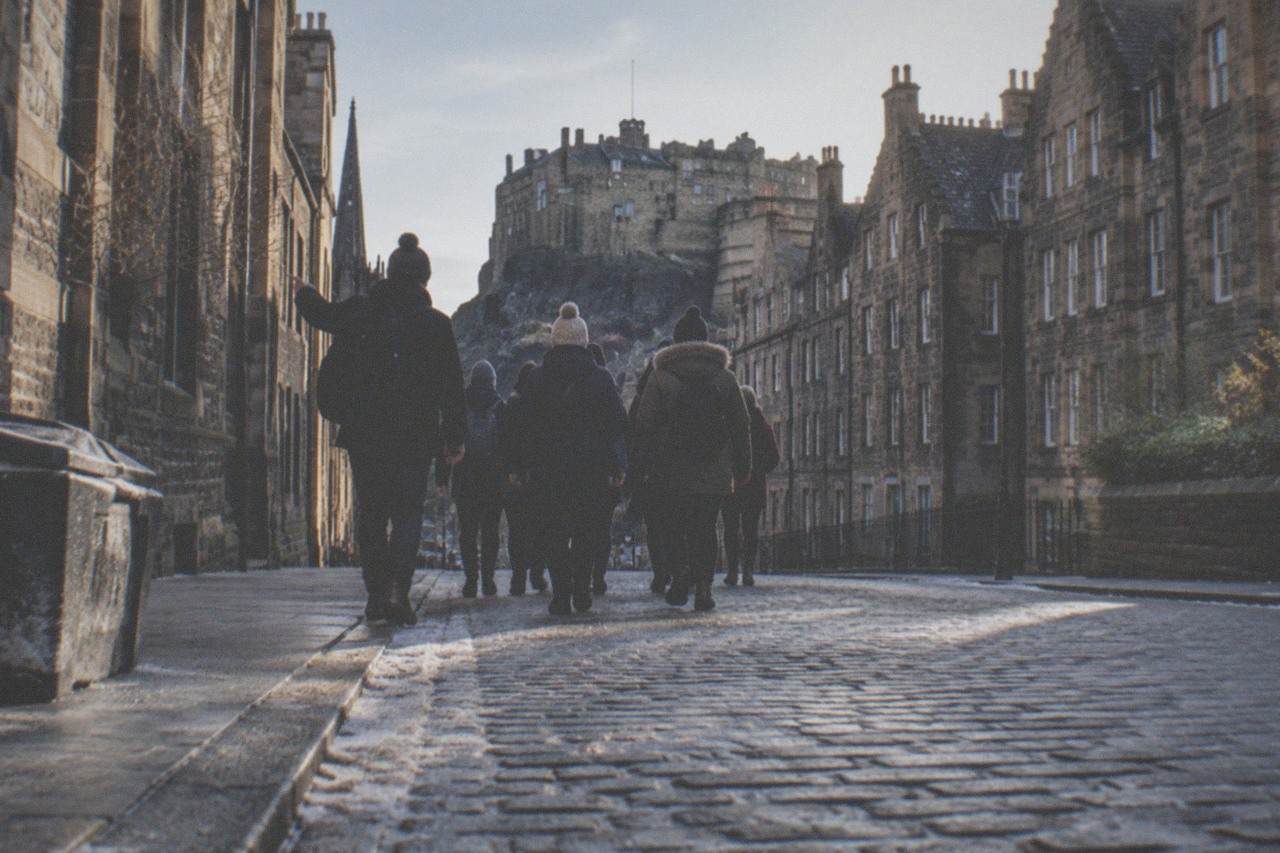
Is The Royal Mile Free?
Yes, the Royal Mile itself is completely free. It is a public street, open around the clock, with no admission mechanism, no gate and no ticket of any kind. What is not free is some of what stands on it: Edinburgh Castle at the top, the Palace of Holyroodhouse at the bottom, and a cathedral in the middle that is moving to a paid model for visitors from outside Scotland.
I grew up in the Highlands and have walked plenty of Scottish streets in my time, but for this page I went looking for what a visitor can genuinely do on the Royal Mile without paying anything, and what quietly costs money. The answer is more layered than most listicles admit, and the layers matter. Edinburgh runs several different attraction operators with different rulebooks, and the Mile cuts through all of them. A free walk covers this ground: Essential Historical Walk, Spanish.
The street itself runs downhill from the castle esplanade to the palace gates, through Lawnmarket, High Street and Canongate. Every metre of it is public highway. You can walk it at midnight in the rain, photograph every close, and read every plaque, and nobody will ask you for a penny. The Royal Mile is also the spine of the Old Town, the part of the city inscribed as a UNESCO World Heritage Site, so even the architecture is the attraction. You are, in a real sense, inside the exhibit.
What you pay for is entry to buildings. And the buildings sort cleanly into three groups: paid landmarks, free museums, and public spaces like kirkyards and closes that cost nothing at all. The table further down this page separates them properly, because the single most common mistake visitors make is assuming the street's famous name attractions share the street's price, which is zero.
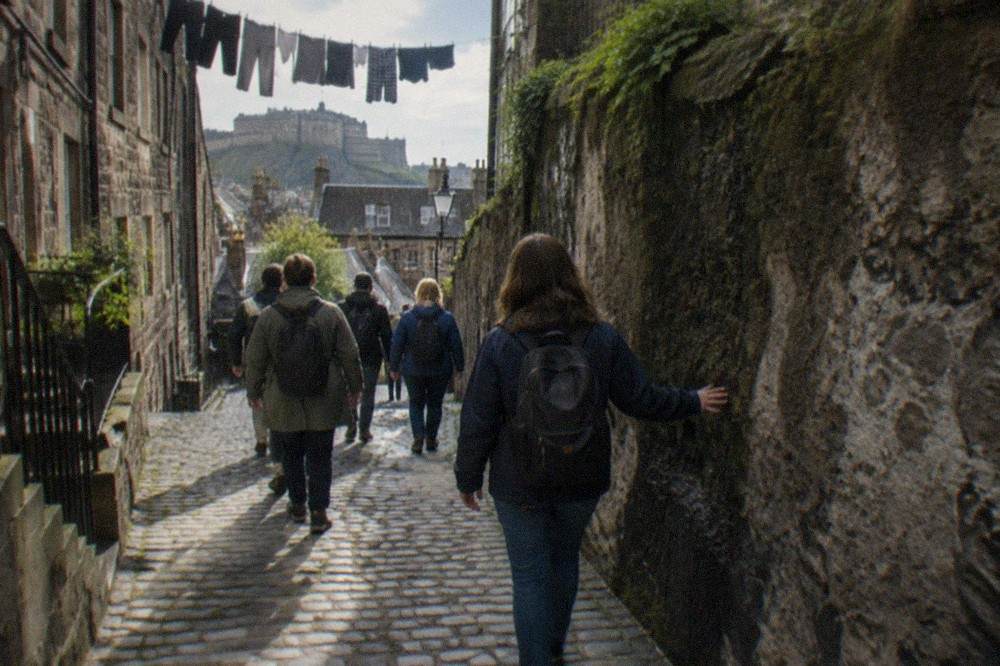
If you want someone to walk the street with you and put stories behind the stones, the free walking tour scene here is strong. The Old Town end of the Mile is where most of the GuruWalk guides meet their groups, and the three below are the ones I would shortlist first: a funny local option, a multilingual essential walk, and a smaller-group alternative with an equally strong rating.
What Is Free Along The Royal Mile, Street By Street?
Everything outdoors is free: the full length of the street, every close and court off it, St Giles' Cathedral's exterior, Greyfriars Kirkyard next to it, and the Canongate Tolbooth's exterior. Three council museums on or just off the Mile are free to enter: the Museum of Edinburgh, the Writers' Museum and the People's Story. The castle and the palace at either end are paid, and St Giles' is introducing a visitor charge.
Start at the top and work down, and the free things come thick and fast. The castle esplanade, the broad open sweep in front of the castle gates, is a public space you can stand on for nothing, with the whole of Princes Street and the New Town laid out below it. You cannot enter the castle without a ticket, but the view from the esplanade edge costs nothing and is one of the best in the city.
Walking down the Lawnmarket, the closes are the attraction. Lady Stair's Close leads to the Writers' Museum, which the operator states plainly is free to visit and open seven days a week. Bakehouse Close, Riddle's Court, White Horse Close: all public, all free, all photogenic. The Lawnmarket section also carries the heaviest concentration of tartan shops and whisky sellers, which is where a free day quietly becomes an expensive one if your willpower is weaker than your packing discipline.
The High Street is the densest stretch. St Giles' Cathedral stands at its heart, and I will come back to it because its admission position is changing this month. Just behind it, Greyfriars Kirkyard is free and open 24 hours a day, 365 days a year, in the kirk's own words, and it is one of the most famous graveyards in the world: Greyfriars Bobby, the Covenanters' Prison, and a body-snatching history that several free walking tours retell nightly. The City of Edinburgh Council keeps the Covenanters' Prison gates locked for preservation, but access can be arranged free by emailing the council's bereavement team, and the Friends of Greyfriars Kirkyard run free tours and open days. One of the free walking routes passes through here: 2-Hour Walk With A Famous Dog.
Below the High Street, Canongate is quieter and, honestly, better value. The People's Story museum sits in the 1591 Canongate Tolbooth and is free to visit. The Museum of Edinburgh, a few doors down, is free too. The Scottish Parliament sits at the bottom of the Canongate, and a self-guided visit there is free with no booking needed, in the Parliament's own words. Then the road ends at the Palace of Holyroodhouse, which is paid, and Holyrood Park beyond it, which is free and open 24 hours a day.
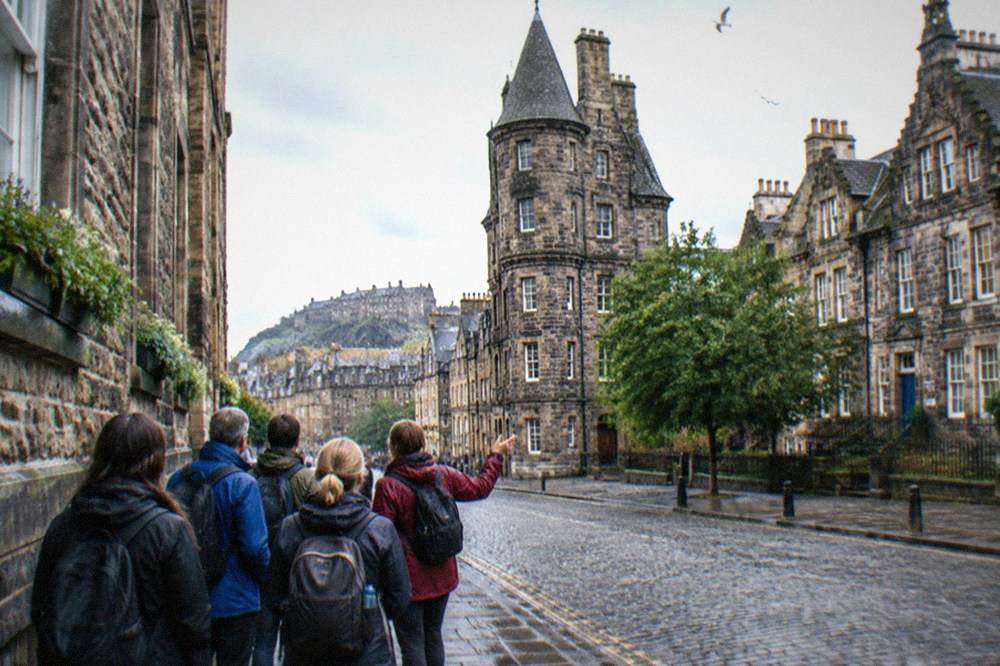
Here is the honest ledger, section by section:
| What | Status | The detail |
|---|---|---|
| The street itself | Free | Public highway, open around the clock, no ticket |
| Castle esplanade | Free | Public space; entering the castle is paid |
| Closes and courts | Free | Public alleys, including Lady Stair's Close and White Horse Close |
| Museum of Edinburgh | Free | Council museum, open seven days a week |
| The Writers' Museum | Free | Council museum, just off the Lawnmarket |
| The People's Story | Free | Inside the Canongate Tolbooth |
| Greyfriars Kirkyard | Free | Open 24 hours a day, 365 days a year |
| Scottish Parliament | Free | Self-guided visits need no booking |
| St Giles' Cathedral | Conditionally free | Moving to a £12 visitor charge; Scottish residents and under-16s stay free |
| Edinburgh Castle | Paid | Adult £23.50 online, £26 walk-up |
| Palace of Holyroodhouse | Paid | Adult £29.70 in advance, £33.30 on the day |
The funny local option deserves a word here, because the Royal Mile is exactly its patch. The Funny Local Guide, Old Town walk runs in English for two hours, rated 4.6 out of 5 across 113 GuruWalk reviews, meeting at the High Street Wellhead by Old Assembly Close. It is free to reserve, the guide is paid by tips, and a comedy-inflected telling is a good antidote to the street's more solemn history boards.
What Is Paid At Either End Of The Royal Mile?
Edinburgh Castle is paid: £23.50 for an adult ticket online, £26 walk-up, with Historic Scotland members entering free and under-7s free. The Palace of Holyroodhouse is paid: £29.70 for an adult in advance, £33.30 on the day, with under-5s and access companions free. Neither has a verified free public element beyond standing outside.
I want to be precise about these two because they are the ones people get wrong. The castle's own ticket page is blunt about it: tickets often sell out far in advance, especially in summer, and once online sales are gone there are no further tickets at the castle. Booking ahead is not a soft suggestion here. The free-entry conditions that do exist at the castle are real but narrow: Historic Scotland members, Explorer Pass holders and under-7s, plus Young Scot card holders paying £1. If none of those describe you, the castle is a paid attraction, full stop. One of the free walking routes passes through here: Harry Potter, Brújula Free Tours.
The palace at the bottom end works the same way. The Royal Collection Trust publishes advance and on-the-day prices, and the advance price is meaningfully cheaper. Under-5s and access companions enter free, and those are the only free tiers the operator verifies. No free part of the palace grounds, forecourt or abbey ruins is verified by any source I checked, so I will not claim one.
Can you still get value from both ends without a ticket? Yes, and this is the honest framing: the esplanade in front of the castle is a free public space with a world-class view, and the palace's exterior, the abbey ruins seen from the park side, and the whole of Holyrood Park beyond it are free to look at and walk through. Holyrood Park, in Historic Environment Scotland's own words, is open 24 hours a day, year-round and free to visit, and that includes Arthur's Seat. So the paid bookends are surrounded by free things. Just do not let a listicle tell you the paid things themselves are free.
Is St Giles' Cathedral Free To Enter?
St Giles' is in transition. The cathedral has announced a £12 visitor charge from September 2026, with free access continuing for residents of Scotland and all under-16s. Its visitor page still describes a donation model, so I will not state today's position as settled in either direction. Check the cathedral's own site before you go.
This is the most changeable fact on the whole street, and I would rather flag it than smooth it over. The cathedral's own pages publish two different present states: one says entry runs on donations with a £10 suggestion, the other says a £12 visitor charging model arrives in September 2026 with Scottish residents and under-16s exempt. For a visitor from outside Scotland, the practical reading is that St Giles' should be treated as a paid or nearly-paid attraction, not as a free thing to do. A free walk covers this ground: 3-Hour Old Town History, Spanish.
What is verified regardless: worship is open to all, the audio tour costs £5.50, and guided tours inside are paused for guide training with a resumption planned for mid-October. Photography rules are not published either way, so I will not repeat the old guidebook claim about a photography permit.
The exterior, at least, is unambiguous. The crown spire is the single most recognisable silhouette on the Mile, the Knox statue stands outside, and the Heart of Midlothian, the brass set into the pavement outside, is a free public tradition: locals spit on it for luck, and no charge has ever been proposed for that.
Are The Museums On The Royal Mile Free?
Three of them are unambiguously free: the Museum of Edinburgh, the Writers' Museum and the People's Story, all run by the council's Culture Edinburgh, all stating "free to visit" on their own pages, all open seven days a week. The Museum of Childhood's page does not state an admission rule in the operator's own voice, so I cannot call it free with confidence.
The three verified free museums are genuinely good, which is the part that surprises people. The Writers' Museum, tucked into Lady Stair's Close, holds collections around Robert Burns, Walter Scott and Robert Louis Stevenson, and Makars' Court outside it is a public paved court inscribed with Scottish writers' words. The Museum of Edinburgh, on the Canongate end, covers the city's own history, including the collar of Greyfriars Bobby. The People's Story tells the city's social history from the inside of a 1591 tolbooth.
Each states its own hours and free admission on its own venue page, and the Museum of Edinburgh's page is typical: free to visit, open seven days a week, last entry at 4.30pm. Groups of ten or more should email ahead. One caution worth carrying: this operator leaves stale closure notices on its pages, so treat the hours as a strong signal rather than a guarantee, and the same operator's monument prices elsewhere in the city show it does charge where it chooses to.
The Museum of Childhood is the odd one out. Its page carries hours and access information but no admission statement in the operator's voice, only a published visitor quote calling it free, and a customer quote is not an admission policy. I would not plan around it being free; I would plan around the three museums that say so themselves.
What About Greyfriars Kirkyard And The Closes?
Greyfriars Kirkyard is free and open 24 hours a day, 365 days a year, in the kirk's own words. The kirk building itself is free to enter with donations encouraged, though it closes to general visitors on many August days while running Fringe events. Every close off the Mile is a free public alley.
The kirkyard is the best free thing adjacent to the Mile, and the kirk's own visitor page states its position plainly. Greyfriars Bobby's statue and gravestone, the Covenanters' Memorial and the atmospheric rows of 17th-century stones are all free to see. The locked Covenanters' Prison section is the one exception, and free access can be arranged through the council's bereavement team by email, or through the Friends of Greyfriars Kirkyard's free tours and open days.
The kirk building is free to enter with donations encouraged, with one important August exception: it is a Fringe venue, and on many August days it is closed to general visiting while ticketed events run. Self-guided information boards are available on entry in several languages.
The closes are the Mile's free secret weapon. Some, like Mary King's Close, are paid attractions underground, and no free public element of that one is listed by its operator. But the open-air closes, Advocate's Close with its framed New Town view, Fleshmarket Close, White Horse Close with its restored 17th-century courtyard, all cost nothing. A free walking tour that works the closes into its route is worth it for this reason alone: the guides know which archways lead somewhere. A free walk covers this ground: Ghosts And Mysteries, Royal Mile.
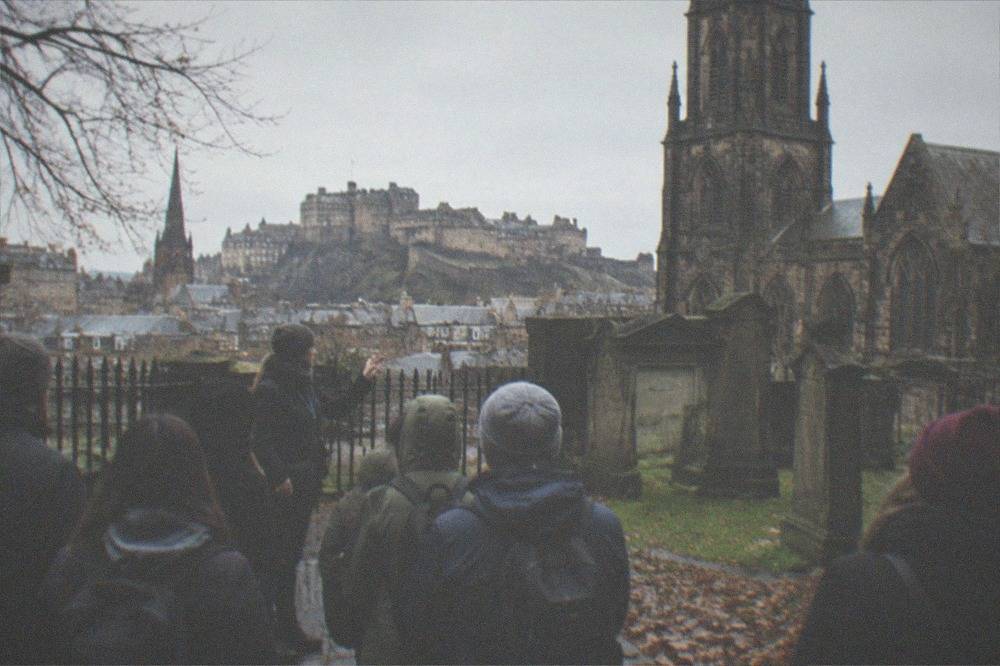
The 2-Hour Walk With a Famous Dog is the GuruWalk option that leans into exactly this territory. It runs in English, meeting at 33 George IV Bridge, a few steps from Greyfriars, and it is rated 4.99 out of 5 across 2,282 GuruWalk reviews, which makes it the largest and strongest-rated English-language walk on the whole Edinburgh roster. The famous dog in question is the four-legged kind, and the route's graveyard-and-closes material is its home ground.
Do You Need A Paid Tour To Enjoy The Royal Mile?
No. The street, the closes, the kirkyard, three museums and the parliament are all free, and a self-guided walk covers all of it. A free, tip-based GuruWalk tour adds a guide's stories at no fixed cost, with the guide paid by tips; GuruWalk's own Edinburgh page describes a contribution of 15 to 50 euros per participant as its recommendation.
I compared the options before writing this, and the honest conclusion is that the Royal Mile is one of the few world-famous streets where a paid tour adds the least, because the free infrastructure is so complete. The Fringe's free-show economy, the council's free museums, the 24-hour kirkyard and the free parliament visits do most of the work a guide would do. What a guide adds is narrative, and the free walking tour format lets you buy exactly that, at a price you set. This stop sits on a free walking route, Canongate History Walk.
The mechanics are simple and worth understanding before you book. The walk costs nothing to reserve on GuruWalk, the guide is paid by tips, and nothing bad happens if you cannot tip. If you want a figure to plan around, GuruWalk's own guidance for its free tours describes contributions of 15 to 50 euros per participant, while its blog notes that many travellers give between 10 and 15 euros. Treat those as the operator's stated ranges, not as a required amount, because there is no required amount.
If you would rather walk alone, the city has quietly grown a self-guided infrastructure too. The Edinburgh Walter Scott Club launched the Central Edinburgh Scott Walk in March 2026, a free self-guided 90-minute route covering 13 sites linked to Sir Walter Scott, and a Historic Churches Walking Trail covering ten city-centre kirks including St Giles', Greyfriars and Canongate Kirk has also launched. Both are free and both spend time on the Mile.
For the full picture of the no-cost options, our guide to Free Things to Do in Edinburgh covers the whole city, and the deeper detail on the street's guided options is in our guide to free walking tours of the Old Town. If kirkyards are your thing, we also answer is Greyfriars Kirkyard free in full, and the castle question gets its own treatment in can you walk up to Edinburgh Castle for free. One of the free walking routes passes through here: Harry Potter Walk With A Dog.
Before the questions, here are the three walks I would weigh up for this street one more time, side by side.
Common Questions About The Royal Mile
Is The Royal Mile Free?
Yes. The Royal Mile is a public street with no admission charge of any kind, open around the clock. The free things on it include three council museums, Greyfriars Kirkyard, the closes and the Scottish Parliament. The paid things are Edinburgh Castle at one end, the Palace of Holyroodhouse at the other, and St Giles' Cathedral, which is moving to a £12 visitor charge with Scottish residents and under-16s exempt.
Do you need tickets to walk the Royal Mile?
No. No part of the street itself requires a ticket, a booking or an entry fee. You only need tickets for the paid attractions on it: the castle, the palace, and underground close tours like Mary King's Close. Free walking tours of the Mile are reserveable at no cost, with guides paid by tips.
Are the museums on the Royal Mile free?
Three are verified free by their operator: the Museum of Edinburgh, the Writers' Museum and the People's Story, all open seven days a week. The Museum of Childhood's operator does not state an admission rule on its own page, so its position cannot be confirmed either way from official sources.
Is St Giles' Cathedral free to enter?
It is changing. The cathedral has announced a £12 visitor charge from September 2026, with free access continuing for residents of Scotland and all under-16s. Its visitor page still described a donation model at the time of research, so check the cathedral's own site for the current position before visiting.
Is the Royal Mile open at night?
Yes. It is a public street with no closing time, and Greyfriars Kirkyard alongside it is open 24 hours a day, 365 days a year. The museums and the parliament keep daytime hours, and the ghost-walk economy of the Old Town means the street is busier after dark than most visitors expect.
Can you do the Royal Mile without spending anything?
Yes, comfortably. Walk the street, explore the closes, visit the three free museums, enter Greyfriars Kirkyard, stand on the castle esplanade and walk through Holyrood Park. Add a free GuruWalk tour if you want a guide, with the tip at your discretion, and the only compulsory spend is nothing at all.